 Dane pri Sežani: A3, Fernetiči - razcep Gabrk, Sežana vzhod
Dane combines the calm of a small Karst settlement with the movement of a motorway corridor in a way that reflects its position in Slovenia’s western borderland. It lies on the Karst Plateau, a limestone region shaped by caves, sinkholes and underground drainage rather than large surface rivers. Wooded low hills and stony ground give this part of the Kras a distinctly inland character, despite the nearby Adriatic. Dane belongs to the Sežana area, where Slovene and Italian cultural landscapes meet. Local building traditions have long made practical use of Karst stone in houses, walls and farmsteads. The road connection places Dane on an important overland route between inland Slovenia and the Italian frontier.
Generated by AI
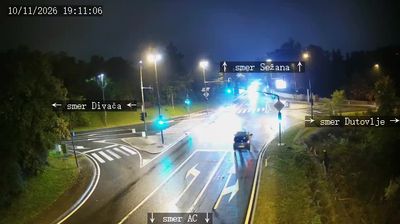

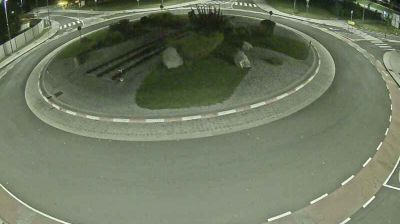



Dane has served as a rural settlement in Slovenia’s Karst region since at least the 19th century. It lies on the limestone Karst Plateau, a borderland landscape shaped by thin soils, stone-built hamlets and the underground drainage that gave the word “karst” to geography worldwide. Sežana is the nearest urban centre, while the wider district is closely associated with Lipica, where the renowned Lipizzan horse stud was founded in 1580. Local architecture commonly uses pale Karst stone, linking Dane to a distinct regional building tradition. Discover how Dane belongs to the Slovenian Karst by exploring webcams in nearby settlements.
2 webcams
Among the regions of Slovenia, Upravna enota Sezana stands out for its limestone Karst terrain on the Italian border. The Kras plateau shapes the area with caves, sinkholes, stone-built settlements and the rust-red soil associated with Teran wine. At Škocjan Caves, the Reka River disappears beneath the surface in a vast underground canyon; the caves have been a UNESCO World Heritage site since 1986. Lipica, home to a stud farm established in 1580, remains central to the Lipizzan horse-breeding tradition. Explore further landmarks through webcams across the Karst area of Upravna enota Sezana.
17 webcams
Slovenia occupies a meeting point of the Alps, the Pannonian Plain, the Dinaric mountains and the Adriatic coast in south-central Europe. The Julian Alps rise in the northwest, where Triglav is the country’s highest mountain, while the Soča River is known for its clear turquoise water. Karst terrain has shaped caves such as Postojna Cave and the Škocjan Caves, a UNESCO World Heritage site. Ljubljana combines a riverside old town with works by architect Jože Plečnik; farther east, wine-growing regions and thermal springs add another dimension. Slovenian food reflects Alpine, Mediterranean and Balkan influences. Find related webcams in the surrounding area to build a fuller picture of Slovenia and the northern Adriatic.
771 webcams