 Castiglione della Pescaia: Piazzale "Maristella" - Entrata Porto - Faro Rosso
Castiglione della Pescaia is best known in Tuscany for its Tyrrhenian beaches and active harbour. The town occupies the Maremma coast where the Bruna River reaches the sea, combining a broad sandy shore with a sheltered port used by fishing and leisure boats. Faro Rosso, the red harbour light, marks the entrance between the breakwaters, while Piazzale Maristella forms part of the seafront area. Above the waterfront, the older quarter climbs toward a medieval castle, a lasting reminder of Castiglione della Pescaia’s role as a fortified coastal settlement.
Generated by AI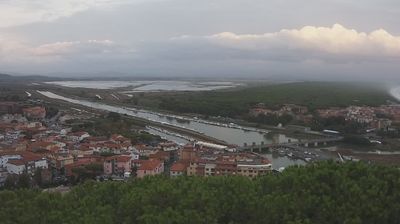
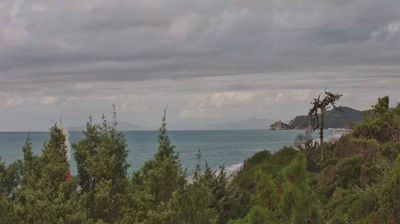
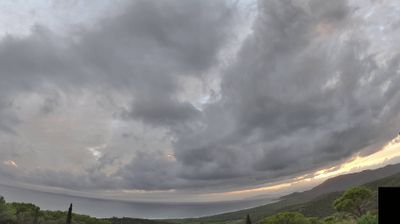
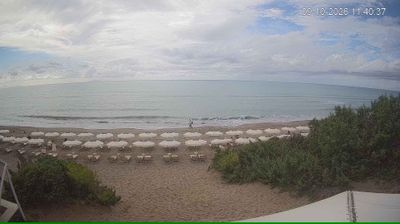
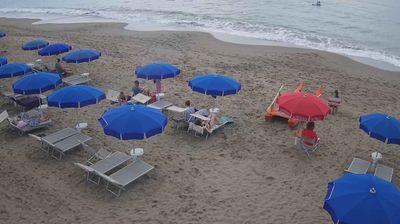
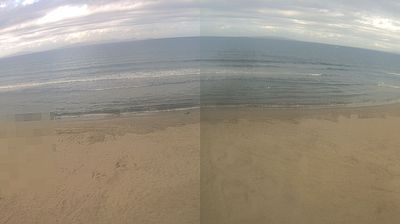

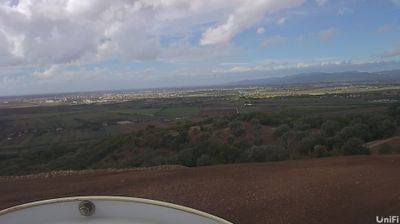

Castiglione della Pescaia lies on Tuscany’s Tyrrhenian coast beside the mouth of the Bruna River, where the Maremma’s lowlands meet beaches, pinewoods and the Diaccia Botrona wetland. The old town rises on a headland beneath the Castello Aragonese, whose defensive walls and narrow lanes recall Castiglione’s role as a coastal stronghold. Fishing remains part of the town’s identity, while its harbour and waterfront connect the historic centre with the sea. To the south, the Diaccia Botrona Nature Reserve safeguards former coastal-lake marshland, an important habitat for waterbirds. Discover how Castiglione della Pescaia relates to the Maremma coast by browsing webcams in the surrounding area.
6 webcams
Tuscany occupies a central belt between the Apennines and the Tyrrhenian Sea in Italy. Near these coordinates, the undulating Val d’Elsa extends between Florence and Siena, its farmland marked by vineyards, olive groves and historic market towns. The Elsa flows into the Arno, the river that crosses Florence before reaching the coast. Siena’s medieval centre is centred on the Piazza del Campo, where the Palio horse race takes place twice each summer. Across Tuscany, olive oil, wine and seasonal cooking remain central to local identity, while its cities hold exceptional Renaissance art and architecture. Find related webcams in the surrounding area to build a fuller picture of the Val d’Elsa and central Tuscany.
168 webcams
Among the countries of southern Europe, Italy stands out for its Mediterranean coastline and cities marked by the legacy of ancient Rome. The Alps form its northern frontier, while the Apennines run down the peninsula and the Po crosses the broad plain of the north. Rome’s Colosseum and Roman Forum recall the ancient empire; Florence is closely associated with the Renaissance, and Venice is built across a lagoon on the Adriatic. Food changes markedly between regions, from olive-oil cooking in the south to rice dishes in the Po Valley. Sicily and Sardinia add distinct island identities to a country whose regions retain strong local character. Explore nearby webcam locations that provide complementary perspectives on Italy’s coasts, cities and mountains.
3.1K webcams