 Novalja: Loža square
The landscape around Loža Square in Novalja is a low, rocky Adriatic coast, which has shaped both the built environment and local life. Novalja occupies a sheltered bay on the northern part of Pag, an island whose dry limestone terrain and indented shoreline are fundamental to its character. Loža Square belongs to the compact waterfront centre, where a palm-lined promenade, small harbour and everyday cafés bring the town close to the water. The settlement’s past reaches beneath its streets: Talijanova buža, a Roman underground aqueduct, is one of Novalja’s distinctive archaeological remains. Beyond the centre, Pag is known for its exposed karst, sheep farming and the local Pag cheese tradition, linking the town to the island’s rural culture.
Generated by AI
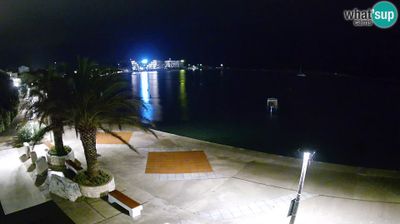
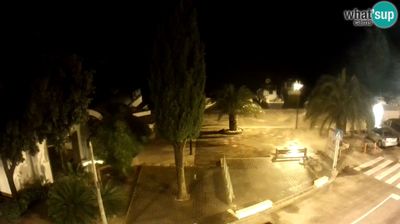
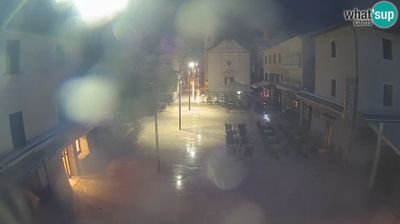


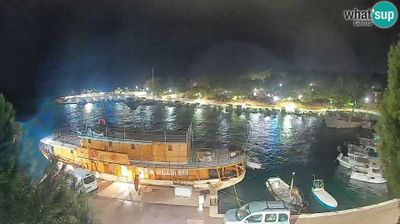

Tucked along a sheltered bay on the northern coast of Pag Island, Novalja is a place whose character is shaped by the island’s pale limestone and the Adriatic Sea. This town in Lika-Senj County combines a working waterfront with the dry, open terrain for which Pag is known. Zrće Beach has made Novalja internationally associated with major summer music events, while the old town preserves the Roman aqueduct known locally as Talijanova buža. The coves and stony shoreline around town place it firmly within the island geography of the northern Dalmatian coast. Continue with other webcams from the area to see how this part of Lika-Senj County connects regionally.
2 webcams
Lika-Senj County extends from the Adriatic coast beneath the Velebit range to the limestone plateaus of Lika, encompassing a marked contrast between island-dotted seascapes, mountains and inland karst. In the county’s northeast, Plitvice Lakes National Park is known for its chain of lakes and travertine barriers; it has been a UNESCO World Heritage Site since 1979. The Gacka River, noted for its clear springs, runs through a gentler valley near Otočac. On the coast, the old town of Senj is crowned by Nehaj Fortress, built in the 16th century as a defensive stronghold. Browse other webcams across Lika-Senj County to place this karst-and-coast setting in a wider Croatian context.
23 webcams
Croatia occupies a long Adriatic coastline in southeastern Europe. Its shore is broken into islands and sheltered coves, while the Dinaric Alps rise inland and the Danube forms part of its eastern border. Dubrovnik’s fortified old city faces the sea, and Split grew around Diocletian’s Palace, a Roman complex begun in the early fourth century. Inland, Plitvice Lakes National Park is known for terraced lakes linked by waterfalls and has been a UNESCO World Heritage Site since 1979. Istrian olive groves, Zagreb and Slavonia’s vineyards reveal distinct regional identities. Explore nearby webcam locations that provide complementary perspectives on the Adriatic coast and Croatia’s interior.
381 webcams