 Deva: Hotel Deva
Deva lies between the Mureș River and the foothills of the Poiana Ruscă Mountains in Hunedoara County, a position that has long made it a regional centre. Hotel Deva stands in the modern urban core, where broad streets, apartment blocks and public buildings extend below wooded heights. Above the city, Deva Citadel occupies a volcanic hill; the fortress was first recorded in the 13th century and remains the city’s defining historic landmark. The settlement grew at a crossroads in western Romania, while the Mureș corridor links it with other Transylvanian towns. Deva is also the county seat of Hunedoara, giving its centre an administrative as well as commercial role.
Generated by AI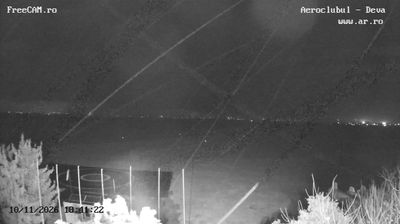
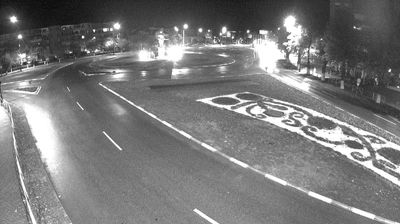

Deva combines the practical tempo of a county seat with the dramatic presence of a hilltop fortress in a way that reflects its position in the Mureș Valley of western Transylvania. Deva Fortress rises from a volcanic hill above the city; first recorded in 1269, it once controlled an important route through the valley. The ruins remain Deva’s defining landmark, reached by paths or an inclined lift, while the streets below form the administrative centre of Hunedoara County. The Mureș, one of Romania’s major west-flowing rivers, shapes the broad corridor around the town. Place Deva in its wider Transylvanian setting by browsing webcams across Hunedoara.
1 webcam
The Carpathian mountains and the Mureș River valley define much of Hunedoara – forests, upland basins and a major east–west corridor have long shaped settlement, transport and industry. In the south, Retezat National Park protects rugged peaks and glacial lakes; the county also extends into the Jiu Valley, historically associated with coal mining. Hunedoara city is known for Corvin Castle, a Gothic-Renaissance monument linked to the Hunyadi family. Near Orăștie, the Dacian fortress of Sarmizegetusa Regia forms part of the UNESCO-listed Dacian Fortresses of the Orăștie Mountains. Move on to other webcams in the region to compare landscapes and settings around Hunedoara.
5 webcams
The terrain of Romania ranges from the Carpathian Mountains in the centre to the Danube Delta wetlands in the east, creating contrasts between highland forests, fertile plains and reed-filled waterways. The Danube reaches the Black Sea here, and its delta supports abundant bird and aquatic life. Transylvania is marked by medieval towns such as Sibiu and Brașov, while Bucharest is home to the monumental Palace of Parliament, commissioned during the communist era. Orthodox monasteries, folk traditions and regional cuisines add further layers to a country shaped by several historic provinces. Discover other points of interest through webcams located across Romania.
142 webcams