 Brinje: Sportski teren Brinje - Church of the Assumption of the Blessed Virgin Mary - Chapel of the Most Holy Trinity - Plemićki grad Sokolac - Utvrda Sokolac
Tucked into the foothills of the Mala Kapela range, Brinje is a place whose character is shaped by the wooded hills surrounding its compact centre. Above the settlement stands Sokolac, a medieval fortress associated with the Frankopan noble family and one of Brinje’s defining monuments. Within its walls is the Chapel of the Most Holy Trinity, a Gothic structure with a distinctive fortified form. The Church of the Assumption of the Blessed Virgin Mary remains the parish church at the heart of local religious life. Low-rise homes, public spaces and sports grounds spread beneath the slopes of Lika-Senj County, making Brinje a small Croatian town where a fortified past remains part of daily life.
Generated by AI


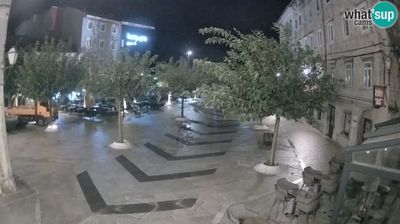


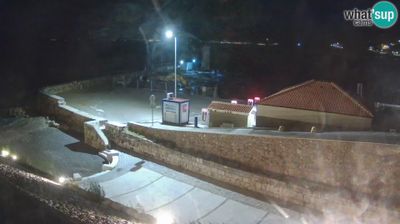

Few towns in Lika-Senj County have a history as closely tied to the medieval Frankopan nobles as Brinje. Their Sokolac Castle stands above the old centre, and its surviving Gothic Chapel of St Mary is the town’s defining monument. Brinje occupies the karst uplands of Lika, beneath the Kapela mountain system in Croatia’s Dinaric interior. Forested slopes, enclosed fields and the long-used route between continental Croatia and the Adriatic give the settlement its distinct setting. Continue through nearby webcams to explore different parts of Brinje and Lika-Senj County.
1 webcam
Lika-Senj County extends from the Adriatic coast beneath the Velebit range to the limestone plateaus of Lika, encompassing a marked contrast between island-dotted seascapes, mountains and inland karst. In the county’s northeast, Plitvice Lakes National Park is known for its chain of lakes and travertine barriers; it has been a UNESCO World Heritage Site since 1979. The Gacka River, noted for its clear springs, runs through a gentler valley near Otočac. On the coast, the old town of Senj is crowned by Nehaj Fortress, built in the 16th century as a defensive stronghold. Browse other webcams across Lika-Senj County to place this karst-and-coast setting in a wider Croatian context.
24 webcams
Croatia occupies a long Adriatic coastline in southeastern Europe. Its shore is broken into islands and sheltered coves, while the Dinaric Alps rise inland and the Danube forms part of its eastern border. Dubrovnik’s fortified old city faces the sea, and Split grew around Diocletian’s Palace, a Roman complex begun in the early fourth century. Inland, Plitvice Lakes National Park is known for terraced lakes linked by waterfalls and has been a UNESCO World Heritage Site since 1979. Istrian olive groves, Zagreb and Slavonia’s vineyards reveal distinct regional identities. Explore nearby webcam locations that provide complementary perspectives on the Adriatic coast and Croatia’s interior.
381 webcams