 Fehmarn: Windsurf-/Kitegebiet
Fehmarn lies along the Baltic Sea, a low, largely agricultural island where open shorelines meet fields, dunes and shallow bays. The windsurfing and kitesurfing area near Gold belongs to a coast shaped by the Fehmarn Belt, the stretch of water between Germany and Denmark. Water sports are an established part of the island’s character, alongside sailing, cycling and beach holidays. Inland, small settlements and working farmland create an unusually open setting rather than an urban waterfront. Fehmarn is linked to the German mainland by the Fehmarn Sound Bridge, opened in 1963, while ferry services from Puttgarden have long made the island an important Baltic crossing point. This blend of cultivated land and sea-based recreation gives Fehmarn a distinct northern German identity.
Generated by AI



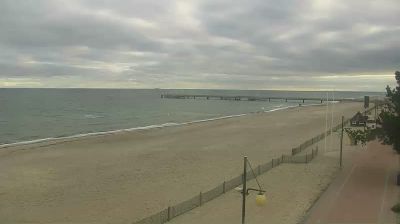


The Baltic Sea defines the setting of Fehmarn — this low-lying German island is shaped by open coasts, farmland, beaches and small harbours, with wind and sea routes part of daily life. The Fehmarn Sound separates it from the mainland, crossed by the Fehmarn Sound Bridge, an arch bridge opened in 1963 and a familiar transport landmark of Schleswig-Holstein. Burg, the island’s principal town, supplies its urban centre, while the coast attracts sailors, cyclists and birdwatchers; Fehmarn also lies on an important bird migration route. Find related webcams in the surrounding Baltic Sea area to build a fuller picture of Fehmarn and Schleswig-Holstein.
2 webcams
Schleswig-Holstein blends maritime openness with rural calm in a way that reflects its position between the North Sea and the Baltic Sea. Germany’s northernmost state borders Denmark and stretches across low farmland, marshes, sandy shores and islands. The Kiel Canal crosses the region, linking the North Sea at Brunsbüttel with the Baltic near Kiel. On the west coast, the tidal flats of the Wadden Sea form part of a UNESCO World Heritage site. Lübeck’s historic centre, shaped by the Hanseatic League and Brick Gothic architecture, adds an important urban counterpoint. Browse additional webcams from the surrounding area to extend your view of Schleswig-Holstein.
122 webcams
Germany stretches from the North Sea and Baltic Sea coasts to the Alps on its southern border, encompassing northern plains, river valleys and forested uplands. The Rhine, Danube and Elbe have long connected its regions, while the Black Forest and Bavarian Alps give the south a more dramatic relief. Berlin’s Brandenburg Gate and Museum Island reflect the capital’s role in German history and culture. Cologne Cathedral, a UNESCO World Heritage Site, rises above the Rhine, and the Bauhaus movement, founded in Weimar in 1919, transformed modern design far beyond Germany. Regional cooking, Christmas markets and brewing traditions bring further character to daily life. Browse additional webcams from the surrounding area to extend your view of Germany.
2.5K webcams