 Lourdes: Hotel notre dame de la sarte
Lourdes straddles the Gave de Pau in the foothills of the French Pyrenees in Occitanie, and the river valley has shaped it into a compact town between wooded slopes and limestone ridges. It is one of the world’s major Catholic pilgrimage centres, centred on the Sanctuary of Our Lady of Lourdes and the Grotto of Massabielle, where Bernadette Soubirous reported Marian apparitions in 1858. The town receives pilgrims seeking religious services and the sanctuary’s baths, while its streets, hotels and public spaces are organised around the needs of large visiting groups. Beyond the sanctuary district, the Gave de Pau continues through the historic region of Bigorre toward Pau.
Generated by AI


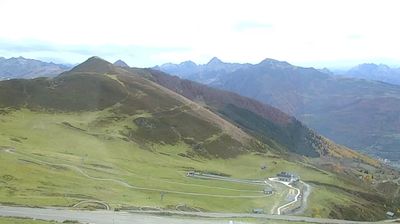
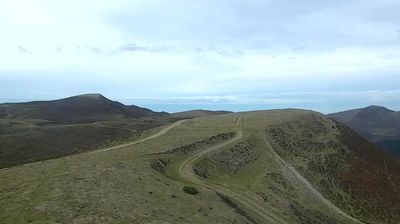


Built around a fortified rock above the Gave de Pau, Lourdes grew into one of the world’s leading Catholic pilgrimage centres. The town stands at the northern foot of the Pyrenees in Occitanie, where the river follows a compact valley. Its modern identity took shape after Bernadette Soubirous reported Marian apparitions at the Massabielle Grotto in 1858. The Sanctuary of Our Lady of Lourdes encompasses the grotto and several basilicas, drawing pilgrims from around the world. Above it, the medieval Château fort de Lourdes, now home to the Pyrenean Museum, recalls the town’s earlier strategic role. Discover other points of interest through webcams located across Lourdes and the Pyrenees foothills.
1 webcam
Occitania occupies a broad southern belt in France, extending from the Massif Central and the Pyrenees to the Mediterranean coast. These coordinates lie in the inland Haut-Languedoc area, where wooded hills and reservoirs around the upper Agout contrast with coastal plains farther east. Toulouse, the regional capital, stands on the Garonne and is associated with the Canal du Midi, a 17th-century waterway linking the city with the Mediterranean and listed as a UNESCO World Heritage Site since 1996. Roman sites, fortresses connected with the Cathar past, and the Occitan language tradition reveal the many layers of southern French identity. Continue through nearby webcams to explore different parts of Occitania.
214 webcams
The Atlantic and Mediterranean coastlines, together with the Alps, Pyrenees and broad river basins, define much of France — they support maritime trade, farming, wine regions and travel throughout the year. The Seine runs through Paris, where the Eiffel Tower and the Louvre are among Europe’s most recognised landmarks. The Loire Valley is known for Renaissance châteaux, while Mont-Saint-Michel rises from a tidal bay in Normandy. Regional food traditions are equally distinctive, from Breton seafood to Provençal cooking, with bread, cheese and wine central to everyday life. France’s global cultural influence is evident in its language, literature, fashion and cinema. View additional webcams nearby to better understand how France’s coasts, plains and mountain borders relate to their surroundings.
2.2K webcams