 Hrpelje-Kozina: A1/E61/E70, Ljubljana - Koper, Videž
Hrpelje-Kozina straddles the Karst Plateau in southwestern Slovenia, and its position where routes divide towards Ljubljana, Koper and the Croatian border has made it an important road junction. The paired settlements lie in the Slovenian Littoral, a limestone country of low wooded ridges, exposed rock and sinkholes that gives the wider Kras region its distinctive form. Major roads converge through this transit corridor, linking the Adriatic port of Koper with inland Slovenia and the Balkans. Local identity is part of the cross-border Karst cultural area, where the Lipica stud, founded in 1580, has bred Lipizzan horses for centuries. Hrpelje-Kozina is a practical stop in a region shaped by geology, borderland connections and long-distance travel.
Generated by AI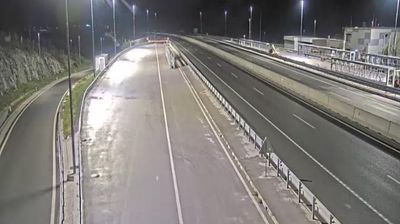
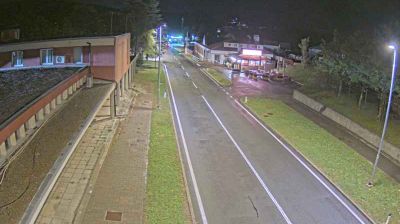
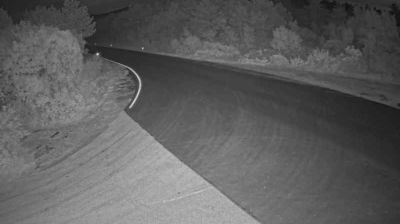


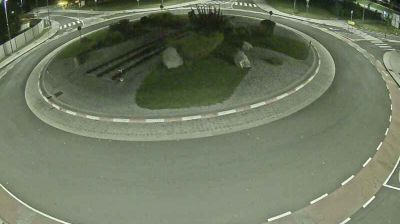


The landscape around Hrpelje-Kozina is a limestone Karst plateau of scrub, woodland and shallow soils, which has shaped both the compact form of its paired settlements and their transport-based economy. Close to the Italian and Croatian borders, it occupies a road and rail corridor linking Slovenia’s interior with the northern Adriatic. The shared name reflects the adjoining communities of Hrpelje and Kozina, which form the centre of their municipality. Porous limestone and dry-stone walls are enduring features of the Slovenian Littoral’s building tradition. Browse other webcams across the Karst and Slovenian Littoral to place this setting in a wider geographic context.
5 webcams
Among the regions of Slovenia, Upravna enota Sezana stands out for its limestone Karst terrain on the Italian border. The Kras plateau shapes the area with caves, sinkholes, stone-built settlements and the rust-red soil associated with Teran wine. At Škocjan Caves, the Reka River disappears beneath the surface in a vast underground canyon; the caves have been a UNESCO World Heritage site since 1986. Lipica, home to a stud farm established in 1580, remains central to the Lipizzan horse-breeding tradition. Explore further landmarks through webcams across the Karst area of Upravna enota Sezana.
18 webcams
Slovenia occupies a meeting point of the Alps, the Pannonian Plain, the Dinaric mountains and the Adriatic coast in south-central Europe. The Julian Alps rise in the northwest, where Triglav is the country’s highest mountain, while the Soča River is known for its clear turquoise water. Karst terrain has shaped caves such as Postojna Cave and the Škocjan Caves, a UNESCO World Heritage site. Ljubljana combines a riverside old town with works by architect Jože Plečnik; farther east, wine-growing regions and thermal springs add another dimension. Slovenian food reflects Alpine, Mediterranean and Balkan influences. Find related webcams in the surrounding area to build a fuller picture of Slovenia and the northern Adriatic.
783 webcams