 Veliki Gorenec: Trakoscan Castle
Among the places of Varaždin County, Trakošćan Castle stands out for its wooded hilltop setting above Lake Trakošćan. The castle was first recorded in 1334 and passed to the Drašković family in 1566, remaining in its ownership for centuries. Its present Romantic, neo-Gothic character largely dates from a 19th-century remodelling, when the surrounding grounds were also shaped into a landscaped park. Today, the castle is a museum, preserving furnished rooms, portraits, weapons and other collections associated with Croatia’s noble heritage. The lake and mature woodland give this historic estate a distinctly secluded setting in the hills of northern Croatia.
Generated by AI
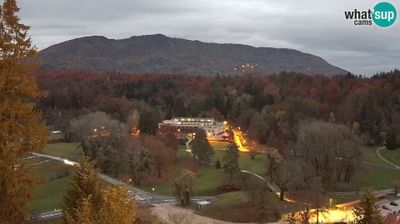







Few settlements in Varaždin County have a history as closely connected to the farming traditions of Hrvatsko Zagorje as Veliki Gorenec. This small rural settlement lies amid the rolling, wooded hills of northwestern Croatia, where scattered homes, fields and local roads define the countryside. The wider area belongs to the historic Zagorje cultural region, long shaped by small-scale agriculture and close-knit village life. Trakošćan Castle, a medieval fortress remodelled in the 19th century, stands nearby and is among Croatia’s best-known historic residences. Browse additional webcams from the surrounding area to extend your view of northwestern Croatia.
1 webcam
Varaždin County stretches from the Drava River on Croatia’s northern border to the slopes of Ivanščica, encompassing fertile lowlands and the rolling hills of Hrvatsko zagorje. Its administrative centre, Varaždin, is known for a compact Baroque core and the Stari Grad fortress, which houses the Varaždin City Museum. The city’s Varaždin Baroque Evenings concert festival reflects a long musical tradition, while Lepoglava is associated with Croatian lace-making. Along the Drava, floodplain habitats and cultivated fields give the county a distinctly northern Croatian character. Place Varaždin County in its wider setting by browsing webcams around the Drava valley and northern Croatia.
8 webcams
Croatia occupies a long Adriatic coastline in southeastern Europe. Its shore is broken into islands and sheltered coves, while the Dinaric Alps rise inland and the Danube forms part of its eastern border. Dubrovnik’s fortified old city faces the sea, and Split grew around Diocletian’s Palace, a Roman complex begun in the early fourth century. Inland, Plitvice Lakes National Park is known for terraced lakes linked by waterfalls and has been a UNESCO World Heritage Site since 1979. Istrian olive groves, Zagreb and Slavonia’s vineyards reveal distinct regional identities. Explore nearby webcam locations that provide complementary perspectives on the Adriatic coast and Croatia’s interior.
381 webcams