 Peníscola
Peñíscola has served as a fortified coastal stronghold in the Valencian Community since the medieval period. Its old town crowns a rocky peninsula projecting into the Mediterranean Sea, enclosed by walls and dominated by the Castle of Peñíscola. Built for the Knights Templar between 1294 and 1307, the fortress later became the residence of Pope Benedict XIII, known as Papa Luna, during the Western Schism. North of the promontory, Playa Norte forms a long sandy urban waterfront, with a palm-lined promenade and hotels extending along the Costa del Azahar. The compact historic core and broad seafront give this Castellón town two closely connected but distinct sides.
Generated by AI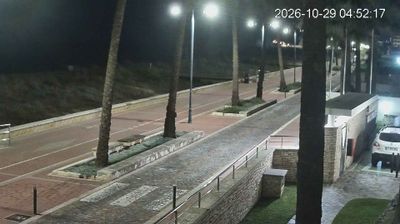
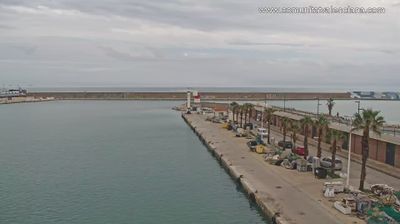
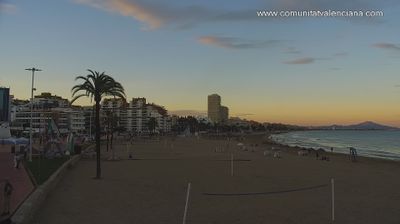

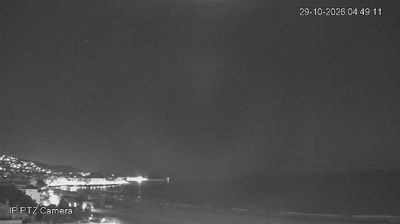

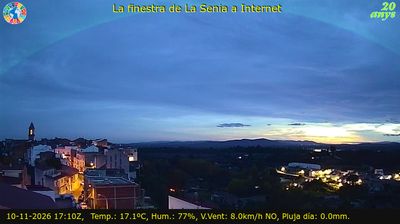


Few cities in the Valencian Community have a history as closely tied to the Western Schism as Peñíscola. The old town rises on a rocky peninsula projecting into the Mediterranean, with the Templar castle dominating its highest point. Built between 1294 and 1307, the fortress later became the residence of Benedict XIII, known in Spain as Papa Luna, during the final phase of the schism. Its walls, narrow streets and seafront setting give the town a form unlike the larger resort centres along this coast. South of town, the Sierra de Irta Natural Park preserves a stretch of undeveloped Mediterranean shoreline. Place Peñíscola in the context of the wider Valencian coast by browsing webcams nearby.
3 webcams
The Valencian Community has served as a Mediterranean cultural crossroads within eastern Spain since the Middle Ages. Its coastline on the Balearic Sea extends from the Costa del Azahar to the Costa Blanca, while the Turia and Júcar rivers cross fertile plains inland. Valencia, the regional capital, was the centre of the medieval Kingdom of Valencia, founded in 1238, and preserves the Silk Exchange, a UNESCO World Heritage site. Rice cultivation around the Albufera lagoon informs local cooking, including paella, while the annual Fallas festivities fill Valencia with sculpture, fire and civic ritual. Discover other points of interest through webcams located across the Valencian Community.
82 webcams
Spain extends from the Cantabrian coast to the Canary Islands, encompassing Atlantic shores, Mediterranean beaches and the broad interior Meseta. The Pyrenees form its northeastern frontier, while the Guadalquivir crosses Andalusia on its way to the Atlantic. Madrid anchors the country’s political and cultural life, but distinct regional identities are central to Spain’s character: Catalonia, the Basque Country, Galicia and Andalusia each have their own languages or strong local traditions. Granada’s Alhambra is a major monument of the medieval Nasrid dynasty, and Santiago de Compostela remains the destination of the Camino de Santiago. Browse related webcams around the Iberian Peninsula to build a fuller picture of Spain.
1.4K webcams