 Slano: Koceljevići - Grgurići - Luka Slano
Slano Bay defines the setting of Slano — its long, sheltered inlet on the Adriatic gives this South Dalmatian settlement the character of a community closely tied to the water. Grgurići and Koceljevići occupy stretches of shore around the bay, while Luka Slano is its harbour. Low, pale limestone hills rise directly behind the houses, a characteristic feature of the Dubrovnik-Neretva County coast. Slano stood within the territory of the Republic of Dubrovnik for centuries, connecting the community to the maritime and administrative world of the former city-state. Its quays, small boats and shore-hugging homes still keep the focus on the bay, with the open Adriatic beyond its narrow entrance.
Generated by AI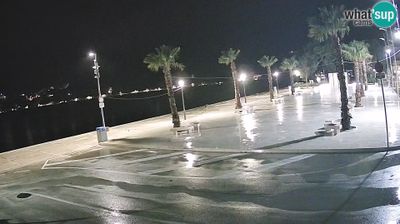


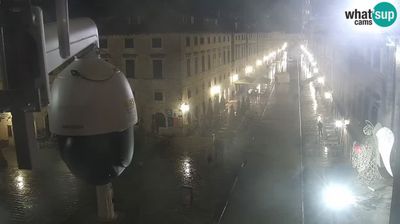



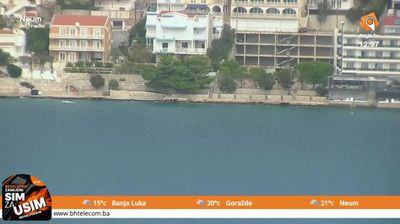

Slano is best known within Croatia for its long, sheltered bay on the Adriatic Sea. Set on the mainland coast of Dubrovnik-Neretva County, the settlement follows the water's edge rather than the island-studded open sea typical of much of Dalmatia. Its protected harbour gave Slano a practical role in the maritime world of the Republic of Ragusa, while stone houses and the Rector's Palace recall Dubrovnik's historic administration of the area. The coast runs towards the Pelješac Peninsula, with olive groves and Mediterranean vegetation rising behind the shore. View additional webcams nearby to better understand how Slano relates to the southern Dalmatian coast.
2 webcams
Shaped by the sea routes of the southern Adriatic, Dubrovnik-Neretva County grew into Croatia’s southernmost county. Its territory is notably fragmented: the walled city of Dubrovnik faces the Adriatic, while the Pelješac Peninsula and the islands of Korčula, Mljet and Lastovo extend along the coast. The Neretva River reaches the sea north of Pelješac, forming Croatia’s best-known delta landscape. Dubrovnik’s Old City, once the centre of the Republic of Ragusa, is enclosed by renowned defensive walls and is UNESCO-listed. Mljet brings a quieter, wooded island character, centred on a national park with saltwater lakes. Continue through nearby webcams to explore different parts of Dubrovnik-Neretva County.
19 webcams
Croatia occupies a long Adriatic coastline in southeastern Europe. Its shore is broken into islands and sheltered coves, while the Dinaric Alps rise inland and the Danube forms part of its eastern border. Dubrovnik’s fortified old city faces the sea, and Split grew around Diocletian’s Palace, a Roman complex begun in the early fourth century. Inland, Plitvice Lakes National Park is known for terraced lakes linked by waterfalls and has been a UNESCO World Heritage Site since 1979. Istrian olive groves, Zagreb and Slavonia’s vineyards reveal distinct regional identities. Explore nearby webcam locations that provide complementary perspectives on the Adriatic coast and Croatia’s interior.
381 webcams