 Teplice: Teplice Observatory
Teplice has served as a spa town in north-western Bohemia since the 12th century. Thermal springs established it as one of the region’s long-standing health resorts, and the centre retains formal spa architecture alongside public parks. Beethoven visited Teplice repeatedly and met Goethe there in 1812, an episode woven into the town’s cultural history. The Teplice Observatory occupies Písečný vrch above the built-up area. Beyond the town rise the foothills of the Krušné hory, the mountain range following the Czech–German border. The spa tradition has shaped Teplice’s streets and civic life for generations.
Generated by AI
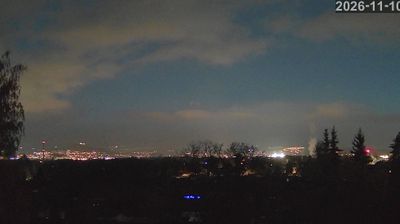


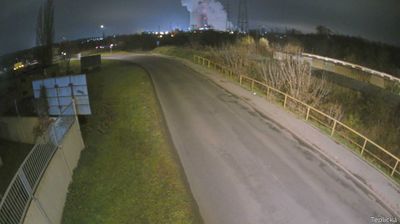

Teplice straddles the transition between the Ore Mountains and the north-west Bohemian lowlands, a position whose thermal mineral springs shaped it into a long-established spa town. The springs have been documented since the 12th century, and the town grew around treatment houses, parks and its historic spa quarter. Teplice later attracted European aristocrats and artists; Ludwig van Beethoven and Johann Wolfgang von Goethe met here in 1812. Today, spa architecture sits alongside the everyday life of a regional centre, with the wooded slopes of the Ore Mountains close by. Discover how Teplice connects with the Ore Mountains and north-western Bohemia by browsing nearby webcams.
2 webcams
The Ore Mountains and the Elbe valley define much of Ústecký kraj - coalfields, fertile river slopes and a major transport route have shaped its industry, agriculture and settlement. Around Most, decades of lignite extraction have altered the basin, with extensive land reclamation continuing alongside active mining. To the north, the region reaches the Elbe Sandstone landscape of Bohemian Switzerland National Park, home to Pravčická brána, a natural sandstone arch. The Elbe also links Ústí nad Labem with Litoměřice and Terezín, whose 18th-century fortress later became a Nazi ghetto and prison during the Second World War. Browse other webcams across Ústecký kraj to place this setting in a wider geographic context.
104 webcams
The terrain of Czechia ranges from fertile lowlands in southern Moravia to mountain ridges along the northern frontier, giving this Central European country a distinctly varied geography. The Vltava runs through Prague before joining the Elbe, while the Krkonoše form part of the border with Poland and include Sněžka, Czechia’s highest mountain. Prague’s historic centre, with Prague Castle and Charles Bridge, reflects the city’s long role as a political and cultural centre. Beyond the capital, Bohemia is known for spa towns and brewing, and Moravia for wine-growing traditions. View additional webcams nearby to better understand how Czechia relates to its Central European surroundings.
1.4K webcams