 Kristinestad: Tie 8 Tie 8Kristiinankaupunki, Lapväärtti - Poriin
Among the coastal towns of western Finland, Kristinestad stands out for its historic centre of wooden houses. Founded in 1649 and named after Queen Christina of Sweden, the town developed as a small port on the Bothnian Sea, with a grid of low timber buildings, courtyards and narrow streets close to the waterfront. Finnish-speaking Lapväärtti, known in Swedish as Lappfjärd, belongs to the municipality’s broad rural hinterland, where Route 8 crosses cultivated fields and scattered farms. The contrast between the old coastal town and Ostrobothnia’s agricultural countryside reflects the bilingual character of Finland’s west coast.
Generated by AI

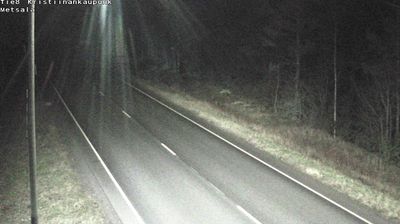

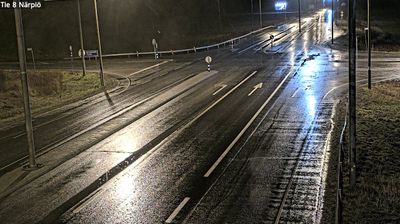
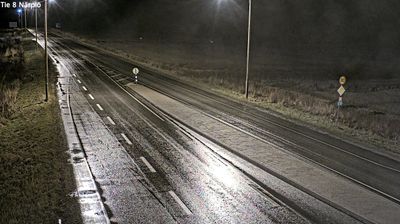


Kristinestad combines a compact wooden-town heritage with an open maritime setting in a way that reflects its position on Finland’s Gulf of Bothnia coast. Founded in 1649 and named for Sweden’s Queen Christina, it developed as a port during the era when Finland belonged to the Swedish realm. In the old centre, a regular street plan leads past low timber houses, small courtyards and buildings that recall the town’s seafaring and trading past. Swedish and Finnish are both part of local life in this bilingual area of Ostrobothnia. The surrounding coast and archipelago place the town within the broad, low-lying landscape of western Finland. Continue through nearby webcams to explore different parts of Kristinestad and the Gulf of Bothnia coast.
6 webcams
Ostrobothnia stretches from the Gulf of Bothnia coast to the inland forest belt, encompassing broad farmland, river valleys and a low, gradually rising shoreline. Vaasa, the regional centre, reflects the area’s bilingual Finnish and Swedish-speaking character. Offshore, the Kvarken Archipelago is part of the UNESCO-listed High Coast/Kvarken Archipelago, recognised for land uplift that continues to reshape its shallow waters and islands. The coast is also linked by ferry to Umeå in Sweden, underlining Ostrobothnia’s long connection with the wider Gulf of Bothnia. Discover other points of interest through webcams located across Ostrobothnia.
81 webcams
The terrain of Finland ranges from low coastal plains along the Gulf of Bothnia to fells in Lapland, creating a country of forests, lakes and long northern distances. More than 180,000 lakes shape everyday life, while the Lakeland region is threaded with waterways and islands. Helsinki, on the Gulf of Finland, combines neoclassical landmarks around Senate Square with contemporary Finnish design. Farther north, the Sámi are Finland’s only recognised Indigenous people, and their culture remains closely connected to the Arctic region. In winter, snow and ice transform the north; in summer, long daylight extends outdoor life well into the evening. Continue through nearby webcams to explore different parts of Finland.
1.7K webcams