 Kajaani: Tie 6 - Kajaanin keskusta
Built around a 17th-century castle on the Kajaaninjoki River, Kajaani grew into the administrative centre of the Kainuu region. The ruins of Kajaani Castle stand on an islet in the river, recalling Sweden’s former eastern frontier and the town’s foundation in 1651 by Governor-General Per Brahe. Kajaani occupies a low, forested part of central Finland, where the Kajaaninjoki flows from Lake Oulujärvi towards the Oulujoki. Broad streets, public services and transport connections give the town the practical character of a regional hub, while the river corridor remains a defining element of its urban setting.
Generated by AI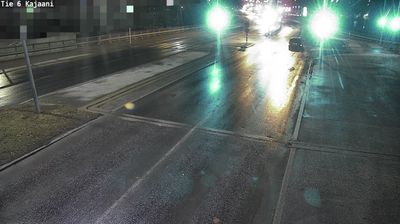

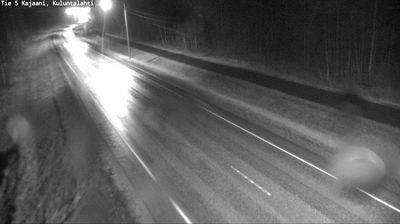

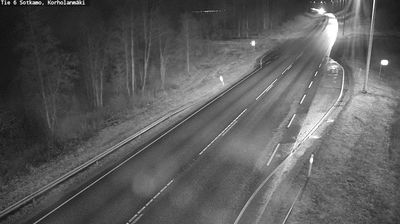
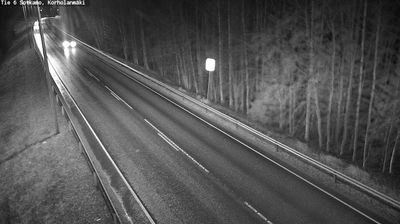

Kajaani is best known within Finland for the ruins of Kajaani Castle, a 17th-century fortress set on an island in the Kajaaninjoki River. The river runs through this Kainuu town from Lake Oulujärvi toward the Oulu River, giving the compact centre a distinct waterside axis. Kajaani is closely associated with Elias Lönnrot, the physician and scholar who lived and worked here while developing the Kalevala from Finnish and Karelian oral poetry. The castle was destroyed in 1716 during the Great Northern War, and its surviving stone walls recall the area’s Swedish-era past. Forests, lakes and pronounced seasonal light shape the wider Kainuu setting. Find related webcams in the surrounding area to build a fuller picture of Kajaani and Kainuu.
8 webcams
Among Finland’s regions, Kainuu stands out for its vast forests, clear lakes and deep connection to the eastern Finnish borderlands. Lake Oulujärvi, Finland’s fourth-largest lake, forms a broad inland expanse near Kajaani, the regional centre. The Kajaaninjoki flows through the town, where the ruins of 17th-century Kajaani Castle stand on a small river island. Farther east, Hossa National Park preserves a landscape of pine woods, ridges, lakes and ancient rock paintings. Kainuu’s identity is also shaped by traditional forestry, fishing and the long winter season. Continue through nearby webcams to explore the lakes, forests and towns of Kainuu.
56 webcams
The terrain of Finland ranges from low coastal plains along the Gulf of Bothnia to fells in Lapland, creating a country of forests, lakes and long northern distances. More than 180,000 lakes shape everyday life, while the Lakeland region is threaded with waterways and islands. Helsinki, on the Gulf of Finland, combines neoclassical landmarks around Senate Square with contemporary Finnish design. Farther north, the Sámi are Finland’s only recognised Indigenous people, and their culture remains closely connected to the Arctic region. In winter, snow and ice transform the north; in summer, long daylight extends outdoor life well into the evening. Continue through nearby webcams to explore different parts of Finland.
1.7K webcams