 Primošten: Riva Žrtava Dvanjke 1
Primošten combines a compact stone-built peninsula with an open Adriatic waterfront in a way that reflects its historic position on Croatia’s Dalmatian coast. Its old town was once an island, later linked to the mainland, and narrow lanes climb toward the Church of St George at the peninsula’s highest point. The Riva is the town’s social shoreline: a promenade beside a small harbour, lined with limestone façades, restaurants and boats. Beyond the centre, the dry low hills around Primošten are shaped by traditional vineyards producing Babić, a well-known Dalmatian red wine. The contrast between the densely settled headland and the wider Adriatic gives this resort town a strongly maritime identity.
Generated by AI
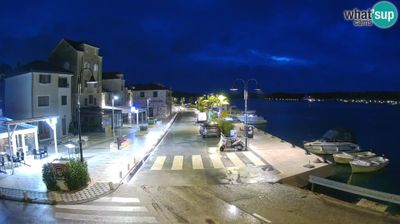
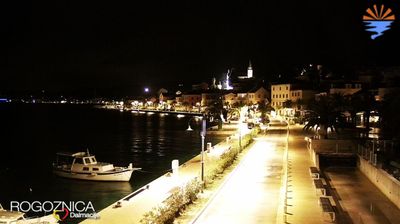


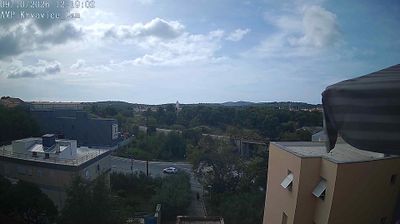
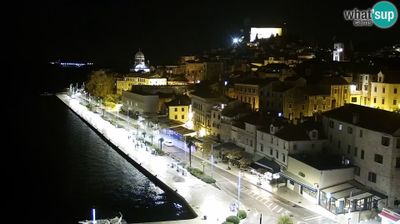

Primošten lies along Croatia’s Adriatic coast, its compact historic core rises from a former island joined to the mainland by a narrow causeway. The town sits between Šibenik and Trogir, where pale limestone, low Mediterranean vegetation and cultivated slopes meet the sea. The Parish Church of St George stands at the top of the old peninsula, while its cemetery is a familiar feature of the headland. Beyond the narrow lanes, dry-stone walls divide vineyards; the Babić wine grape is closely associated with this part of Dalmatia. Primošten developed from a fortified coastal settlement into a summer resort, yet the peninsula remains its unmistakable centre. See how Primošten fits into the central Dalmatian coast by browsing webcams nearby.
2 webcams
Šibenik-Knin County stretches from the Adriatic coast and island-dotted archipelago to the Dinara mountain hinterland, encompassing karst plains, river canyons and maritime islands. Its county seat, Šibenik, stands at the mouth of the Krka River and is known for the Cathedral of St James, a UNESCO World Heritage site built entirely of stone. Krka National Park follows the river through waterfalls and lakes, while Kornati National Park protects a striking cluster of mostly barren islands west of the mainland. Coastal towns, island settlements and inland Knin give the county a distinctly varied Dalmatian character. Discover how Šibenik-Knin County connects with the surrounding Croatian coast by browsing nearby webcams.
26 webcams
Croatia occupies a long Adriatic coastline in southeastern Europe. Its shore is broken into islands and sheltered coves, while the Dinaric Alps rise inland and the Danube forms part of its eastern border. Dubrovnik’s fortified old city faces the sea, and Split grew around Diocletian’s Palace, a Roman complex begun in the early fourth century. Inland, Plitvice Lakes National Park is known for terraced lakes linked by waterfalls and has been a UNESCO World Heritage Site since 1979. Istrian olive groves, Zagreb and Slavonia’s vineyards reveal distinct regional identities. Explore nearby webcam locations that provide complementary perspectives on the Adriatic coast and Croatia’s interior.
381 webcams