 Sebetov: Krčma na koupáku
Sebetov has served as an agricultural settlement in Moravia since the Middle Ages. The village lies amid the gently rolling farmland and woodland of the Drahanská vrchovina, in the northern part of South Moravia. Its compact built-up area is framed by small fields, gardens and wooded slopes rather than urban development. Krčma na koupáku is a local refreshment venue beside the municipal outdoor swimming pool, providing a casual recreational meeting point for residents and visitors. Sebetov is a quiet stop in the rural Boskovice area, where everyday village life remains closely connected to the surrounding agricultural countryside.
Generated by AI
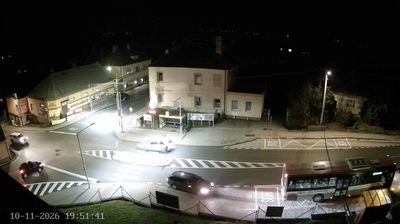




Sebetov has served as an agricultural settlement in the historic land of Moravia since the Middle Ages. The municipality lies in northern South Moravia, where rolling farmland meets the Drahany Highlands, a wooded upland that shapes the countryside east of Boskovice. Fields, small woodland areas and scattered farmsteads give this part of Blansko District a distinctly rural character. The Church of Saint Nicholas is Sebetov’s parish landmark and a visible link to the settlement’s long-standing local traditions. Move on to other webcams in South Moravia to compare landscapes and settings around Sebetov and the Drahany Highlands.
3 webcams
South Moravian Region has acted as a cultural crossroads within the Czech lands since the Middle Ages. Brno, Czechia’s second-largest city, is its urban centre, with Špilberk Castle recalling its long strategic role. The region extends across the warm lowlands of the Morava and Dyje rivers, where vineyards shape the countryside around Mikulov and Znojmo. To the north, the Moravian Karst is known for its limestone caves and the Macocha Abyss. The Lednice–Valtice Cultural Landscape, a UNESCO World Heritage Site, combines formal estates, follies and parkland near the Austrian border. Continue with other webcams from the area to see how this part of South Moravia connects regionally.
93 webcams
The terrain of Czechia ranges from fertile lowlands in southern Moravia to mountain ridges along the northern frontier, giving this Central European country a distinctly varied geography. The Vltava runs through Prague before joining the Elbe, while the Krkonoše form part of the border with Poland and include Sněžka, Czechia’s highest mountain. Prague’s historic centre, with Prague Castle and Charles Bridge, reflects the city’s long role as a political and cultural centre. Beyond the capital, Bohemia is known for spa towns and brewing, and Moravia for wine-growing traditions. View additional webcams nearby to better understand how Czechia relates to its Central European surroundings.
1.4K webcams