 Marianske Lazne: Church of the Assumption - Kašna s fontánou
Mariánské Lázně is best known within Czechia for its mineral springs. Set among the wooded slopes of the Slavkov Forest, the planned resort developed around cold mineral waters used for drinking cures and bathing. The Church of the Assumption of the Virgin Mary, completed in 1848, is a prominent landmark near Goethe Square, while promenades, parks and ornamental fountains shape the town centre. Mariánské Lázně became a town in 1868 and has formed part of the UNESCO-listed Great Spa Towns of Europe since 2021. Colonnades, spa houses, hotels and villas give this West Bohemian resort a formal, spacious character that sets it apart from an ordinary provincial town.
Generated by AI

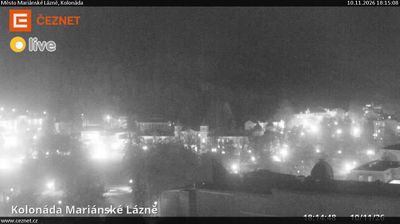
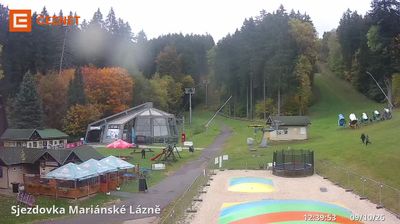
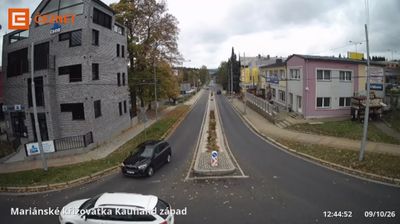
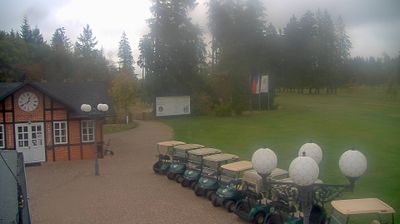


Mariánské Lázně combines grand 19th-century spa architecture with a wooded setting in a way that reflects its position at the edge of the Slavkov Forest in western Bohemia. Mineral springs have shaped the town’s purpose since its development as a spa resort in the early 1800s, and their waters remain central to its colonnades and drinking pavilions. The cast-iron Main Colonnade, built in 1888–89, is its defining architectural landmark; nearby, the Singing Fountain performs to music during the warmer season. In 2021, the town was inscribed on UNESCO’s Great Spa Towns of Europe list. Browse additional webcams from the surrounding area to extend your view of western Bohemia.
9 webcams
Among Czechia’s regions, Karlovarský kraj stands out for its long-established spa culture, shaped by mineral springs and elegant resort architecture. Karlovy Vary, Mariánské Lázně and Františkovy Lázně form the celebrated West Bohemian spa triangle; all are included in UNESCO’s transnational Great Spa Towns of Europe listing. The region also reaches into the Ore Mountains along the German border, while the Ohře River runs through its lower valleys. Beyond treatment houses and colonnades, Karlovy Vary is internationally known for its annual film festival and the local herbal liqueur Becherovka. Continue with other webcams from the area to see how this part of western Czechia connects regionally.
56 webcams
The terrain of Czechia ranges from fertile lowlands in southern Moravia to mountain ridges along the northern frontier, giving this Central European country a distinctly varied geography. The Vltava runs through Prague before joining the Elbe, while the Krkonoše form part of the border with Poland and include Sněžka, Czechia’s highest mountain. Prague’s historic centre, with Prague Castle and Charles Bridge, reflects the city’s long role as a political and cultural centre. Beyond the capital, Bohemia is known for spa towns and brewing, and Moravia for wine-growing traditions. View additional webcams nearby to better understand how Czechia relates to its Central European surroundings.
1.4K webcams