 Kaštanjež: Plaža Rupice - Uvala Soline
Among the coastal settlements of Istria County, Kastanjez stands out for its position beside the sheltered waters of Uvala Soline. This Adriatic inlet is edged by pine woodland and low, indented shores, creating a protected setting for small boats and jetties. Plaža Rupice belongs to this intimate stretch of coast rather than to a broad, open beachscape. The wider Istrian Peninsula has long been shaped by fishing, seafaring and olive cultivation; its olive oil remains one of the region’s traditional products. The bay opens towards the Adriatic Sea beyond its wooded margins, while nearby coves and headlands give the southern Istrian shore its varied outline.
Generated by AI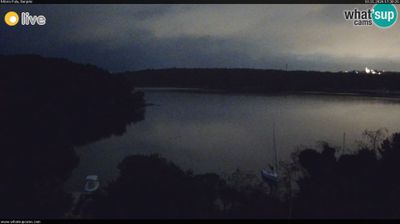


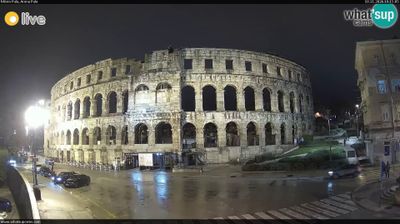
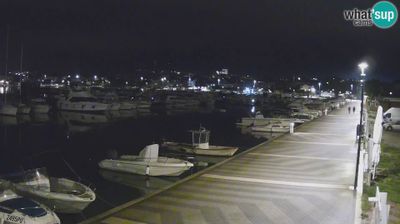

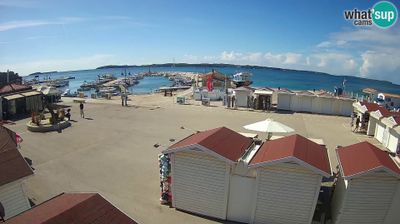

Kastanjez lies along the Adriatic coast of southern Istria, where low karst terrain meets an indented shoreline of coves and small peninsulas. It belongs to the wider Pula area, a part of Croatia shaped by Roman, Venetian and Austro-Hungarian eras. Pula’s Roman Amphitheatre, commonly called the Arena, dates from the 1st century and remains the region’s defining historic monument. The coast around Banjole and Medulin has sheltered inlets and active boating waters, while Cape Kamenjak marks the rugged southern edge of the Istrian Peninsula. Find related webcams across southern Istria to build a fuller picture of the Pula region.
2 webcams
The Adriatic coastline and limestone interior define much of Istria County – together they support tourism, vineyards, olive groves and smaller farms. Croatia’s westernmost county occupies most of the Istrian peninsula, where the Mirna River runs through northern valleys towards the sea. Pula’s Roman amphitheatre is among its best-known historic landmarks, while Poreč’s Euphrasian Basilica is inscribed on UNESCO’s World Heritage List. Rovinj and other old coastal ports recall centuries of Adriatic trade; inland, hill towns and regional food traditions create a markedly different rhythm. Discover nearby webcam locations for complementary perspectives on Istria County.
45 webcams
Croatia occupies a long Adriatic coastline in southeastern Europe. Its shore is broken into islands and sheltered coves, while the Dinaric Alps rise inland and the Danube forms part of its eastern border. Dubrovnik’s fortified old city faces the sea, and Split grew around Diocletian’s Palace, a Roman complex begun in the early fourth century. Inland, Plitvice Lakes National Park is known for terraced lakes linked by waterfalls and has been a UNESCO World Heritage Site since 1979. Istrian olive groves, Zagreb and Slavonia’s vineyards reveal distinct regional identities. Explore nearby webcam locations that provide complementary perspectives on the Adriatic coast and Croatia’s interior.
380 webcams