 Pakoštane: Trg Kralja Tomislava - Hafen Pakoštane - Otičić Sveta Justina - Otok Veli Školj
Among the places of Zadar County, Pakoštane stands out for its position between the Adriatic Sea and Lake Vrana. Its waterfront harbour faces the small islets of Otičić Sveta Justina and Veli Školj, part of the low, indented Dalmatian coast. Lake Vrana, just inland, is Croatia’s largest natural lake and the centrepiece of Vrana Lake Nature Park; this close meeting of saltwater shore and freshwater wetland gives the settlement a distinctive setting. Trg Kralja Tomislava forms part of Pakoštane’s centre, linking the harbour area with local lanes and daily life. The square’s name commemorates King Tomislav, an important figure in early Croatian history.
Generated by AI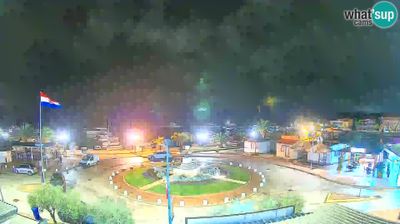


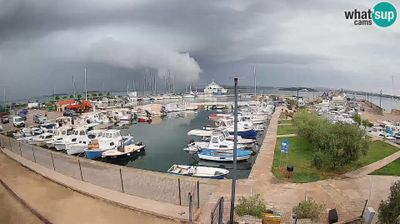

Pakoštane combines an Adriatic waterfront with a freshwater hinterland in a way that reflects its position between the sea and Lake Vrana. The settlement occupies a narrow stretch of the Zadar County coast, where beaches, small coves and cultivated fields lie close together. Just inland, Vransko jezero Nature Park protects Lake Vrana, Croatia’s largest natural lake and an important wetland for birds. Pakoštane is also shaped by Dalmatian coastal traditions: fishing, olive growing and seasonal food remain part of local life. Its setting helps explain the close relationship between the island-dotted Adriatic and the lowland lake country behind it. Continue with other webcams from Zadar County to see how this part of Croatia’s Adriatic coast connects regionally.
3 webcams
Zadar County extends from the slopes of the Velebit range to the islands of the Zadar archipelago, encompassing a karst hinterland, a long Adriatic shore and scattered islands. Its county seat, Zadar, preserves a Roman Forum beside the early-medieval Church of St Donatus, one of the city’s defining monuments. Beyond the city, Paklenica National Park protects dramatic canyons on Velebit, while the Zrmanja River cuts through inland karst before reaching the sea. Ferries bind the coast to islands including Dugi Otok, Ugljan and Pašman, where olive growing, fishing and stone-built settlements remain part of local life. Browse additional webcams nearby to better understand how Zadar County relates to the Adriatic coast and its islands.
41 webcams
Croatia occupies a long Adriatic coastline in southeastern Europe. Its shore is broken into islands and sheltered coves, while the Dinaric Alps rise inland and the Danube forms part of its eastern border. Dubrovnik’s fortified old city faces the sea, and Split grew around Diocletian’s Palace, a Roman complex begun in the early fourth century. Inland, Plitvice Lakes National Park is known for terraced lakes linked by waterfalls and has been a UNESCO World Heritage Site since 1979. Istrian olive groves, Zagreb and Slavonia’s vineyards reveal distinct regional identities. Explore nearby webcam locations that provide complementary perspectives on the Adriatic coast and Croatia’s interior.
381 webcams