 San Cristobal de La Laguna: Aeropuerto Tenerife Norte desde el Ortigal
Among the places of the Canary Islands, San Cristóbal de La Laguna stands out for its UNESCO-listed historic centre, laid out as a planned town after the Castilian conquest of Tenerife. On Tenerife’s northern slopes, the city developed inland from the Atlantic coast and became the island’s first capital. Its two historic quarters retain a grid of streets and many religious and civic buildings from the 16th to 18th centuries. Tenerife North–Ciudad de La Laguna Airport is nearby, while the terrain rises northeastward towards the Anaga Mountains, whose ridges define this part of the island.
Generated by AI
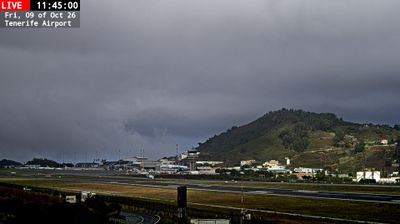
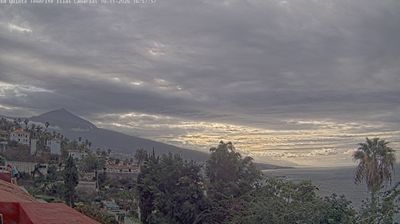

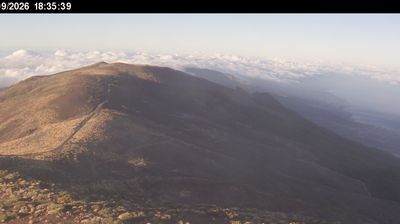
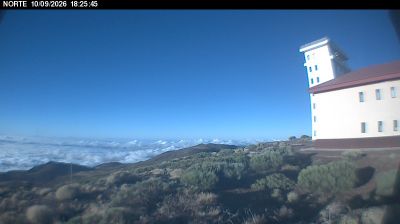

Among the cities of the Canary Islands, San Cristóbal de La Laguna stands out for its UNESCO-listed historic centre, a planned inland city on Tenerife that helped shape urban design in the Americas. Set on the La Laguna plain below the Anaga Mountains, it was Tenerife’s capital until 1833 and retains an unusually coherent network of streets and courtyards. The old town’s churches, convents and patrician houses reflect the island’s role in Atlantic trade after the Castilian conquest. The University of La Laguna adds a lively academic presence to its historic districts. See how San Cristóbal de La Laguna fits within northern Tenerife by browsing webcams nearby.
2 webcams
The Canary Islands have served as an Atlantic crossroads within Spain since the fifteenth century. This volcanic archipelago lies off northwestern Africa, where the Atlantic Ocean, trade winds and sharply varying terrain shape climates ranging from dry coasts to cool uplands. Tenerife is home to Mount Teide, Spain’s highest peak, while the Teide National Park is a UNESCO World Heritage Site. Across the islands, black-sand shores, lava fields and cultivated slopes reflect their volcanic origins. Carnival traditions, especially those of Santa Cruz de Tenerife, remain an important part of the local calendar. View additional webcams nearby to better understand how the Canary Islands relate to the Atlantic and to one another.
72 webcams
Spain extends from the Cantabrian coast to the Canary Islands, encompassing Atlantic shores, Mediterranean beaches and the broad interior Meseta. The Pyrenees form its northeastern frontier, while the Guadalquivir crosses Andalusia on its way to the Atlantic. Madrid anchors the country’s political and cultural life, but distinct regional identities are central to Spain’s character: Catalonia, the Basque Country, Galicia and Andalusia each have their own languages or strong local traditions. Granada’s Alhambra is a major monument of the medieval Nasrid dynasty, and Santiago de Compostela remains the destination of the Camino de Santiago. Browse related webcams around the Iberian Peninsula to build a fuller picture of Spain.
1.3K webcams