 Frasco: Cabioi
Among the places of Ticino, Frasco stands out for its setting in the narrow upper reach of Valle Verzasca. The village stands beside the Verzasca River, amid steep slopes that rise quickly into the surrounding Lepontine Alps. Stone-roofed buildings preserve the construction traditions of this isolated valley, where granite has long shaped both houses and terraces. Frasco was an independent municipality until 2020, when it joined the new municipality of Verzasca with six neighbouring communities. Its scale remains resolutely rural: a compact settlement, mountain pastures and woodland rather than resort development. The upper valley is used by walkers heading deeper into the alpine landscape, while the river and sharply enclosed terrain give Frasco a markedly different character from the towns around Lake Maggiore.
Generated by AI
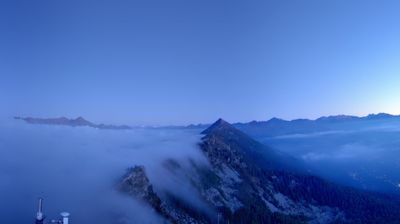
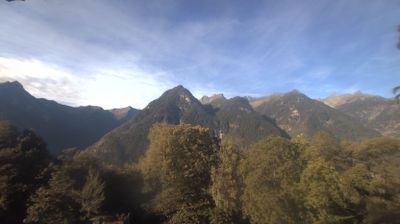

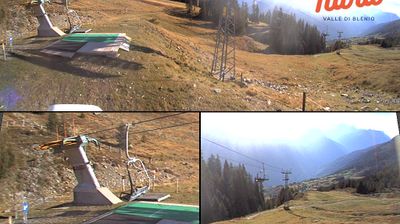
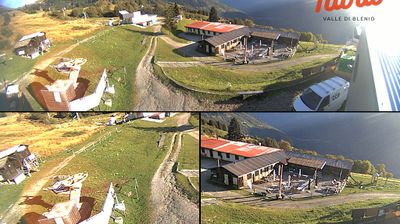
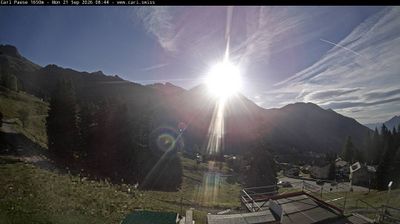

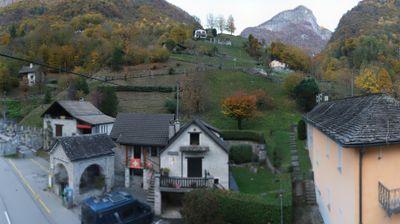

The Verzasca River shapes the setting of Frasco — in this upper Ticino valley, steep slopes keep homes and the road close to the water. The Efra, a mountain tributary, joins the Verzasca here, underlining Frasco’s character as a small alpine settlement. Stone-built houses and farm buildings recall the valley’s long tradition of mountain agriculture and seasonal grazing. In 2016, Frasco became part of the municipality of Verzasca, together with several neighbouring valley communities. Continue with other webcams from the area to see how this part of Ticino connects regionally.
1 webcam
Ticino combines high Alpine terrain with a distinctly Italian-speaking character in a way that reflects its position between the Swiss Alps and northern Italy. Lake Maggiore and Lake Lugano lend a lakeside dimension to a canton otherwise shaped by steep valleys, including the Maggia and Verzasca. Bellinzona, the cantonal capital, is marked by three medieval castles whose defensive complex is listed by UNESCO. In Locarno, Piazza Grande is internationally known as the principal venue of the Locarno Film Festival. South of the Gotthard, major rail and road routes have long connected central Europe with the Italian plain. View additional webcams nearby to better understand how Ticino relates to the Alpine valleys and lakes around it.
68 webcams
Switzerland stretches from the Jura Mountains in the northwest to the Alps in the south, encompassing a central plateau of cities, farms and lakes. The Rhine rises in the Swiss Alps, while Lake Geneva forms part of the country’s southwestern border. Zürich, Geneva and Basel are major urban centres, yet mountain railways and passes remain central to how many regions are experienced. Four national languages—German, French, Italian and Romansh—reflect Switzerland’s distinct cantonal identities. The Matterhorn above Zermatt is among Europe’s most recognisable peaks, and the 1291 Federal Charter is closely associated with the country’s founding tradition. Continue through nearby webcams to explore different parts of Switzerland.
1.5K webcams