 Foncine-le-Haut: Foncine le Haut
Built around the upper valley of the Saine, Foncine-le-Haut grew into a dispersed mountain commune in the French Jura. The Saine rises here before joining the Ain farther south, while the surrounding Jura relief alternates between grazed clearings, woodland and small settlements. This is part of the Haut-Jura landscape, close to the Swiss border and shaped by long-established dairy farming. The local pastures belong to the wider Comté-producing area, where milk from Montbéliarde and Simmental cattle is used for the region’s protected cheese. Foncine-le-Haut represents the quieter, rural side of the Jura rather than an urban centre.
Generated by AI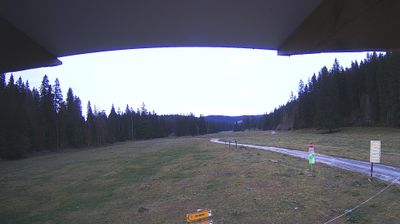


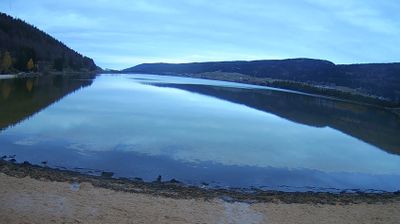
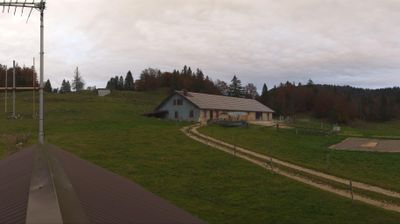


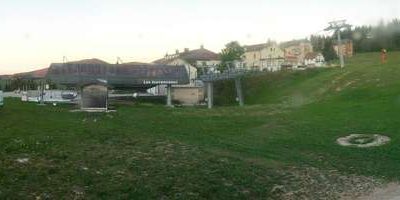

Foncine-le-Haut has served as a high-Jura pastoral settlement in Franche-Comté since the Middle Ages. The commune lies in the Val de Foncine, where the Saine rises before flowing west to meet the Ain. Forests, mountain pastures and limestone terrain shape this section of the Jura Mountains, not far from the Swiss border. Winter sport is part of the local identity: Foncine-le-Haut belongs to the Haut-Jura Nordic skiing area, while paths through the surrounding countryside are used by walkers and cyclists in warmer seasons. Its compact village setting reflects the working rural character of the uplands. Browse additional webcams from the surrounding Jura to extend your view of Foncine-le-Haut.
1 webcam
Bourgogne–Franche-Comté is best known within France for Burgundy’s climats, a UNESCO-listed mosaic of vineyard parcels and winegrowing settlements. The region joins the historic Burgundy wine country around Dijon and Beaune with Franche-Comté, where the Jura Mountains run along the Swiss border. The Saône crosses its western lowlands, while the Doubs shapes valleys farther east. Dijon’s Palace of the Dukes and Estates of Burgundy recalls the capital’s ducal past; in the Jura, Comté cheese is made under a protected designation of origin. Vineyards, stone towns, forests and mountain pastures give this large eastern region a distinctly varied identity. Discover other points of interest through webcams located across Bourgogne–Franche-Comté.
89 webcams
The Atlantic and Mediterranean coastlines, together with the Alps, Pyrenees and broad river basins, define much of France — they support maritime trade, farming, wine regions and travel throughout the year. The Seine runs through Paris, where the Eiffel Tower and the Louvre are among Europe’s most recognised landmarks. The Loire Valley is known for Renaissance châteaux, while Mont-Saint-Michel rises from a tidal bay in Normandy. Regional food traditions are equally distinctive, from Breton seafood to Provençal cooking, with bread, cheese and wine central to everyday life. France’s global cultural influence is evident in its language, literature, fashion and cinema. View additional webcams nearby to better understand how France’s coasts, plains and mountain borders relate to their surroundings.
2.1K webcams