 Seehausen am Staffelsee: Uffing am Staffelsee - Kirchtalstr
The landscape around Seehausen am Staffelsee is defined by a broad lake, wooded shores and the foothills of the Bavarian Alps, which have shaped both the built environment and local life. Seehausen lies on the eastern shore of Staffelsee, a lake with several islands whose water and reed-fringed margins give this small Upper Bavarian settlement its character. The largest island, Wörth, carries the Church of St Michael, recalling a monastery that existed there from the early Middle Ages until secularisation in 1803. Paths and waterside businesses connect the village to boating, swimming and walking, while the Alpine foothills form its wider setting. Nearby Murnauer Moos, one of Central Europe’s largest continuous wetlands, adds a contrasting expanse of moorland to the area.
Generated by AI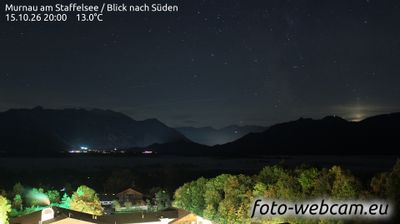
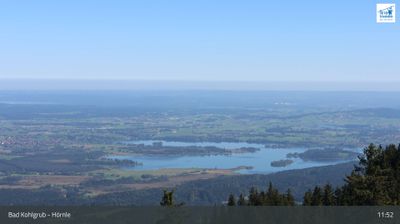
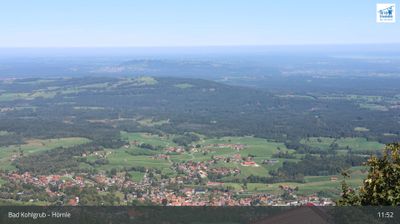
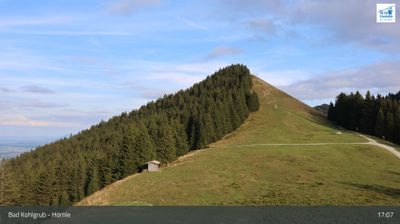
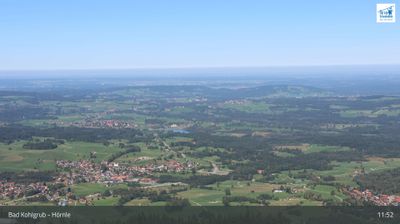
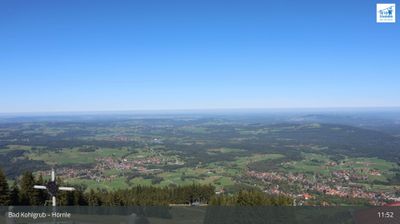
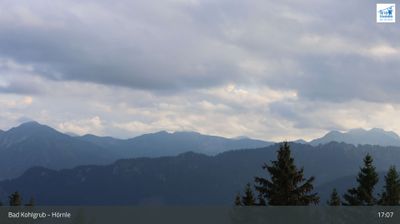
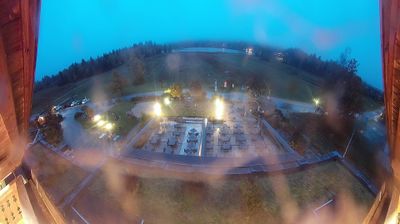
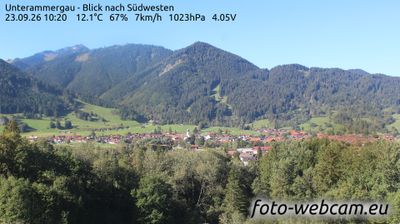

Seehausen am Staffelsee has served as a lakeside settlement in Upper Bavaria since the Middle Ages. It occupies the northern shore of Staffelsee, a lake formed by Alpine glaciation and scattered with seven islands; Wörth, the largest, lies just offshore. The Bavarian Alpine foothills shape the town’s open pre-Alpine setting, while the Murnauer Moos wetland extends nearby. Wörth also has an early-medieval legacy: a monastery stood on the island in the Carolingian era. Move on to other webcams in Upper Bavaria to compare lakeside landscapes and settings around Staffelsee.
1 webcam
Built around the early medieval Duchy of Bavaria, Bavaria grew into Germany’s largest federal state. The Danube crosses its broad centre, while the Bavarian Alps form its southern edge and include the Zugspitze, Germany’s highest mountain. Munich is the state capital and the home of Oktoberfest, a festival rooted in an 1810 royal wedding. Beyond the metropolis, Franconia’s vineyards, Swabian towns and Alpine resorts reveal how varied this part of Germany can be. Browse additional webcams from the surrounding area to extend your view of Bavaria.
867 webcams
Germany stretches from the North Sea and Baltic Sea coasts to the Alps on its southern border, encompassing northern plains, river valleys and forested uplands. The Rhine, Danube and Elbe have long connected its regions, while the Black Forest and Bavarian Alps give the south a more dramatic relief. Berlin’s Brandenburg Gate and Museum Island reflect the capital’s role in German history and culture. Cologne Cathedral, a UNESCO World Heritage Site, rises above the Rhine, and the Bauhaus movement, founded in Weimar in 1919, transformed modern design far beyond Germany. Regional cooking, Christmas markets and brewing traditions bring further character to daily life. Browse additional webcams from the surrounding area to extend your view of Germany.
2.8K webcams