 Sorvagur: Vagar airport
Vágar Airport sits on the island of Vágar in the Faroe Islands, where a narrow settled valley meets the North Atlantic’s steep, treeless hills. It is the archipelago’s only airport and its principal air connection with the outside world. Built by British military engineers during the Second World War, the runway was later adapted for civilian traffic, which began in 1963. Sørvágur lies nearby on the island’s south coast, while Vágar is also known for Lake Sørvágsvatn and the waterfall Múlafossur at Gásadalur. The terminal and apron make this a working transport hub within the exposed terrain that defines much of the Faroes.
Generated by AI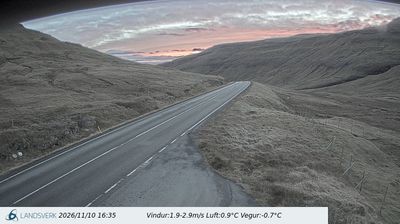

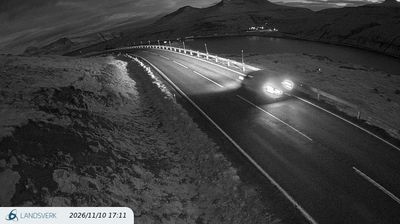
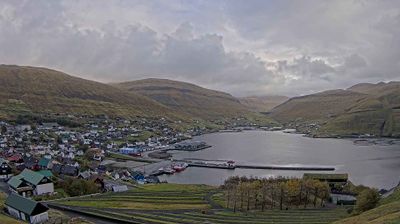

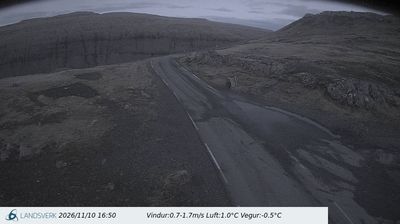

Vágar region has served as a western island community within the Faroe Islands since the Viking Age. Set on the island of Vágar, it combines steep Atlantic-facing cliffs with sheltered settlements around Sørvágur, Miðvágur and Sandavágur. Sørvágsvatn, also known as Leitisvatn, is the Faroes’ largest lake and lies close to the ocean beyond dramatic coastal escarpments. Near Gásadalur, Múlafossur drops directly toward the sea, while Vágar Airport provides the islands’ principal air connection. The Sandavágur Runestone is a notable medieval reminder of the region’s early Nordic history. View additional webcams nearby to better understand how Vágar relates to the surrounding Faroese islands.
6 webcams
Built around Norse settlements sustained by North Atlantic sea routes, the Faroe Islands developed into a self-governing archipelago within the Kingdom of Denmark. Eighteen rugged islands lie between Norway and Iceland, where steep basalt cliffs, grass-roofed houses and narrow fjords define the coast. The capital, Tórshavn, stands on Streymoy, while the sea stacks at Drangarnir and Lake Sørvágsvatn on Vágar reveal the islands’ striking geology. Faroese, descended from Old Norse, remains the everyday language, and the Løgting in Tórshavn is among the world’s oldest parliaments. Fishing and sheep farming continue to shape local life alongside a contemporary Nordic food and arts scene. Discover other points of interest through webcams located across the Faroe Islands.
50 webcams