 Passo Stelvio - Stilfserjoch: Chiesa di Passo dello Stelvio - Memorial stone for the cyclist Fausto Coppi - Passo Stelvio
The Stelvio Pass defines the setting of Passo Stelvio – Stilfserjoch — a compact summit settlement shaped by a high Alpine road at 2,757 metres on the boundary of Lombardy and South Tyrol. Built in the 1820s, the road links Bormio with Prad am Stilfserjoch and is famed for the 48 hairpin bends on its northern descent. The pass church stands among hotels, restaurants and cycling-oriented businesses at the top. A memorial stone recalls Fausto Coppi, whose 1953 Giro d’Italia ride over the pass secured one of cycling’s enduring Alpine legends. Stelvio remains one of Italy’s most recognised road passes, attracting cyclists, motorcyclists and travellers crossing the Ortler Alps.
Generated by AI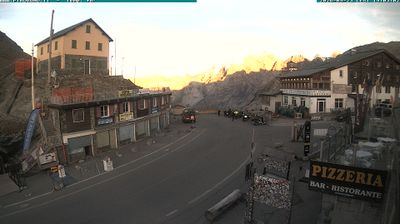
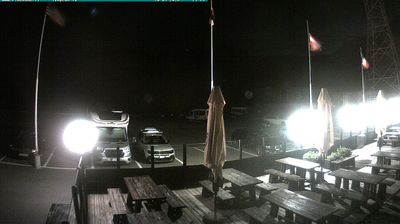

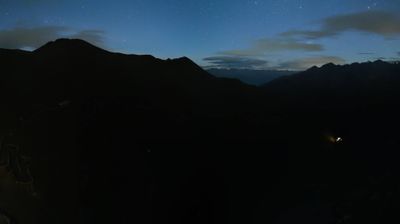


Few places in Lombardy have a history as closely tied to Alpine road engineering as Passo Stelvio, also known as Stilfserjoch. At 2,757 metres, this mountain pass marks the boundary between Lombardy and South Tyrol in the Ortler Alps. Its celebrated road was built between 1820 and 1825 under Austrian rule, following plans by engineer Carlo Donegani. The eastern descent is recognised for its 48 numbered hairpin bends, while the surrounding high country belongs to Stelvio National Park. The pass has also become a demanding fixture in professional cycling, including the Giro d’Italia. Browse additional webcams from the surrounding area to extend your view of the Ortler Alps.
8 webcams
Shaped by the Po Valley and the southern Alps, Lombardy developed into Italy’s leading economic region. Its territory runs from high Alpine valleys to the broad Po plain, where the Adda, Oglio and Ticino are major waterways. Milan is its metropolitan centre, marked by the Gothic Duomo and a long role in finance, design and publishing. Farther east, Bergamo is divided between its walled Città Alta and modern lower city; nearby Lake Iseo lies between Lombardy’s pre-Alpine ridges. Rice fields around Pavia, vineyards in Franciacorta and lake towns give the region a markedly varied identity. Browse other webcams across Lombardy to place this setting in a wider geographic context.
316 webcams
Among the countries of southern Europe, Italy stands out for its Mediterranean coastline and cities marked by the legacy of ancient Rome. The Alps form its northern frontier, while the Apennines run down the peninsula and the Po crosses the broad plain of the north. Rome’s Colosseum and Roman Forum recall the ancient empire; Florence is closely associated with the Renaissance, and Venice is built across a lagoon on the Adriatic. Food changes markedly between regions, from olive-oil cooking in the south to rice dishes in the Po Valley. Sicily and Sardinia add distinct island identities to a country whose regions retain strong local character. Explore nearby webcam locations that provide complementary perspectives on Italy’s coasts, cities and mountains.
3.1K webcams