 Perugia: abbazia di San PIetro
Among Umbria’s cities, Perugia stands out for its hilltop historic centre, shaped by Etruscan foundations and medieval streets. The city occupies a ridge between the Tiber valley and Lake Trasimeno, with neighbourhoods stepping down its slopes. Piazza IV Novembre forms the civic heart, where the Fontana Maggiore stands beside the Gothic Palazzo dei Priori and the cathedral of San Lorenzo. The bell tower of the Basilica di San Domenico is one of Perugia’s most recognisable landmarks; the Dominican complex reflects the city’s medieval religious life. Perugia is also home to the University of Perugia, founded in 1308, while the underground passages of Rocca Paolina preserve part of the fortress built for Pope Paul III. Its annual Umbria Jazz festival gives the old centre a major contemporary cultural role.
Generated by AI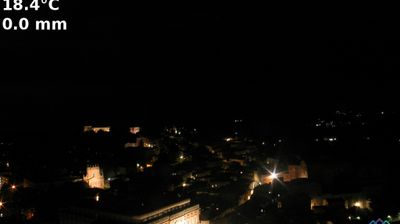

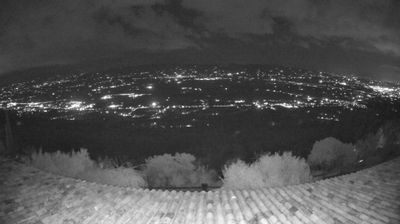



The Tiber Valley defines the setting of Perugia — the historic centre occupies a hill above Umbria’s rolling interior, so steep lanes, escalators and layered streets connect its upper and lower quarters. Perugia was an important Etruscan city before becoming a Roman municipium; the Arco Etrusco remains one of its most conspicuous ancient gates. Piazza IV Novembre forms the civic core, with the Gothic Palazzo dei Priori and the 13th-century Fontana Maggiore. The city is also known internationally for Umbria Jazz, held each summer, and for Baci Perugina chocolate. Browse additional webcams from surrounding Umbria to extend your view of Perugia and its hill country.
6 webcams
Umbria blends an agricultural calm with the rugged contours of the Apennines in a way that reflects its position within central Italy. Italy’s only region without a coastline or an international border, it is crossed by the Tiber and includes Lake Trasimeno, one of the country’s largest lakes. Perugia, the regional capital, preserves an Etruscan past, while Assisi is known worldwide for the Basilica of Saint Francis and its UNESCO-listed artistic heritage. Olive groves, vineyards and hill towns remain central to the region’s everyday character. Continue through nearby webcams to explore different parts of Umbria.
39 webcams
Among the countries of southern Europe, Italy stands out for its Mediterranean coastline and cities marked by the legacy of ancient Rome. The Alps form its northern frontier, while the Apennines run down the peninsula and the Po crosses the broad plain of the north. Rome’s Colosseum and Roman Forum recall the ancient empire; Florence is closely associated with the Renaissance, and Venice is built across a lagoon on the Adriatic. Food changes markedly between regions, from olive-oil cooking in the south to rice dishes in the Po Valley. Sicily and Sardinia add distinct island identities to a country whose regions retain strong local character. Explore nearby webcam locations that provide complementary perspectives on Italy’s coasts, cities and mountains.
3.1K webcams