 Thessaloniki: meteothes.gr) 2
Thessaloniki is best known within Greece for the White Tower, an Ottoman-era landmark on its waterfront. At the head of the Thermaic Gulf, the city has long been Macedonia’s principal port and commercial centre. The tower was part of the Ottoman fortifications, while steep streets rise inland from the seafront to the Upper Town, where sections of Byzantine walls survive. Founded by Cassander in 315 BC and named for his wife Thessalonike, it became one of the eastern Mediterranean’s major cities. Its layered past is preserved in Early Christian and Byzantine churches, many included in the UNESCO-listed Monuments of Thessaloniki, and in the Rotunda, a structure begun in the early 4th century. The seafront remains a defining axis of the modern city.
Generated by AI


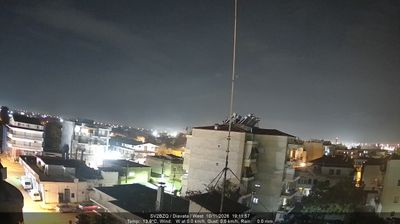
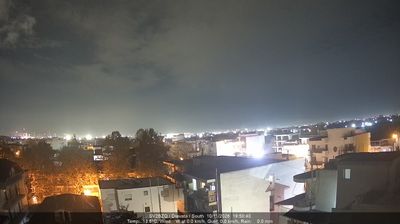
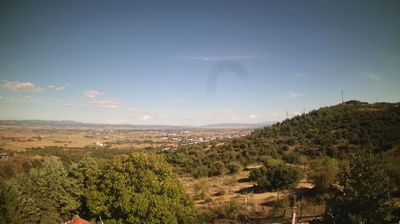


Thessaloniki sits at the head of the Thermaic Gulf in northern Greece, where the Macedonian plain meets the Aegean coast. Greece’s second-largest city was founded in 315 BC by Cassander and developed into an important Roman and Byzantine port. The White Tower, its best-known waterfront landmark, recalls the Ottoman era, while the Rotunda and Church of Hagios Demetrios form part of the city’s UNESCO-listed early Christian and Byzantine monuments. Aristotle Square opens onto the gulf, and the promenade links central districts with the port. Local cooking reflects Greek, Balkan, Sephardic Jewish and Ottoman influences. Browse additional webcams from the surrounding area to extend your view of Thessaloniki and the Thermaic Gulf.
3 webcams
Macedonia and Thrace has served as a cultural crossroads in the Greek lands since antiquity. Around the lower Strymon River, fertile plains meet the foothills and routes that have long linked the Aegean coast with the Balkan interior. Ancient Amphipolis, founded by Athenians in 437 BC, grew beside a strategic crossing of the Strymon and later became an important Macedonian and Roman centre. Farther east, the archaeological site of Philippi recalls the Roman Via Egnatia and the region’s place in Mediterranean travel and trade. Browse other webcams across Macedonia and Thrace to place this setting in a wider geographic context.
70 webcams
Greece occupies a mountainous peninsula and island-dotted coastline in southeastern Europe. The Aegean Sea shapes its eastern shore, while the Ionian Sea lies to the west; Crete is the country’s largest island. Athens is anchored by the Acropolis, where the Parthenon has stood since the fifth century BCE as a defining monument of classical antiquity. Beyond the capital, the Pindus Mountains run through the mainland, and Mount Olympus is associated in ancient Greek religion with the home of the gods. Greek food traditions centre on olive oil, seafood, cheeses and regional dishes, with long meals remaining an important part of social life. Continue through nearby webcams to explore the islands and mainland regions of Greece.
504 webcams