 Chemnitz: Innenstadt
Chemnitz combines an industrial legacy with an increasingly visible cultural role in a way that reflects its position on the northern edge of the Ore Mountains. The Chemnitz River runs through a Saxon city that developed into a major centre of textile production and engineering during the 19th century; that chapter is documented by the Industriemuseum Chemnitz. Its centre was heavily destroyed in the Second World War and reshaped in the post-war decades, creating a mix of reconstructed historic references, GDR-era planning and contemporary buildings. The monumental Karl Marx Monument, unveiled in 1971, remains a defining civic landmark. Chemnitz was European Capital of Culture in 2025, drawing international attention to this changing former industrial city.
Generated by AI

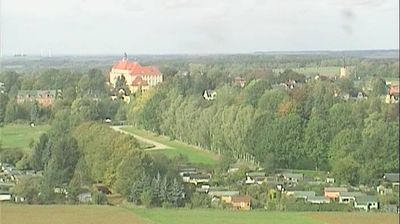


The Chemnitz River defines the setting of Chemnitz — it runs through a city of broad avenues, rail corridors and former factory districts shaped by Saxony’s industrial age. Textile machinery, vehicle production and engineering made Chemnitz one of Germany’s important manufacturing centres in the 19th and early 20th centuries. That legacy is explored at the Chemnitz Museum of Industry, while the monumental Karl Marx head near the city centre remains a defining landmark from the GDR era. Chemnitz was named European Capital of Culture for 2025, bringing fresh attention to its museums, architecture and creative scene. Discover other points of interest through webcams located across Chemnitz and Saxony.
4 webcams
Saxony is renowned across Germany for Meissen porcelain, first produced in the town of Meissen in 1710. The state stretches from the Ore Mountains on the Czech border to the Elbe valley, whose banks include Dresden, Saxony’s capital. Dresden’s reconstructed Frauenkirche and the baroque Zwinger reflect its role as a historic court city, while Leipzig has long been associated with trade fairs and Johann Sebastian Bach, who worked at St Thomas Church. East of Dresden, the Elbe Sandstone Mountains create the striking rock country of Saxon Switzerland. Move on to other webcams in the region to compare landscapes and settings around Saxony.
129 webcams
Germany stretches from the North Sea and Baltic Sea coasts to the Alps on its southern border, encompassing northern plains, river valleys and forested uplands. The Rhine, Danube and Elbe have long connected its regions, while the Black Forest and Bavarian Alps give the south a more dramatic relief. Berlin’s Brandenburg Gate and Museum Island reflect the capital’s role in German history and culture. Cologne Cathedral, a UNESCO World Heritage Site, rises above the Rhine, and the Bauhaus movement, founded in Weimar in 1919, transformed modern design far beyond Germany. Regional cooking, Christmas markets and brewing traditions bring further character to daily life. Browse additional webcams from the surrounding area to extend your view of Germany.
2.5K webcams