 New Harris Settlement: Kelly's Mountain
Kellys Mountain defines the setting of New Harris Settlement — its wooded slopes give this rural part of Cape Breton Island a strongly elevated, forested character near Bras d’Or Lake. Highway 105, part of the Trans-Canada Highway, crosses the mountain and forms an important road corridor for northern Cape Breton. Settlement is sparse here, with the terrain, highway and surrounding woodland taking precedence over urban development. Cape Breton lies within Mi’kma’ki, the ancestral territory of the Mi’kmaq, whose living culture remains fundamental to the island’s identity. New Harris Settlement represents a quieter but well-connected side of Nova Scotia.
Generated by AI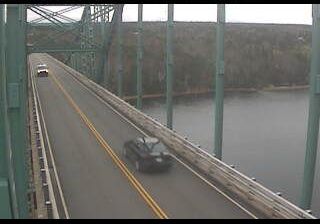
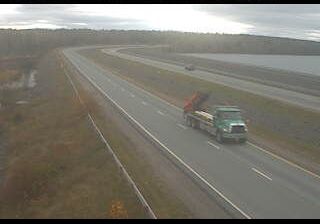
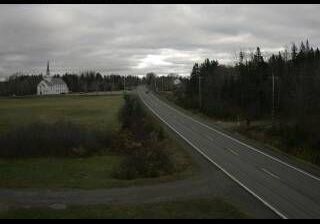
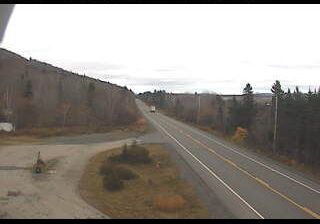

New Harris Settlement sits on Boularderie Island in Nova Scotia, where wooded rural land lies between Bras d’Or Lake and the Great Bras d’Or channel. This small Cape Breton Island community belongs to an area shaped by water routes and scattered settlements rather than urban streets. Boularderie Island forms part of the traditional territory of the Mi’kmaq, while Cape Breton is widely associated with enduring Gaelic and Acadian traditions. Its quiet inland setting provides a different perspective on an island better known for its Atlantic coastline. See how New Harris Settlement relates to Boularderie Island and Cape Breton by browsing webcams nearby.
1 webcam
Built around Atlantic fisheries and seaborne trade, Nova Scotia grew into a maritime province whose communities remain closely tied to the water. Its peninsula and Cape Breton Island face the Atlantic, while the Bay of Fundy shapes much of the western coast and is known for some of the world’s highest tides. Halifax, the provincial capital, is home to the star-shaped Halifax Citadel National Historic Site, recalling the city’s strategic role as a harbour. Mi’kmaq culture is fundamental to the province’s identity, alongside Acadian and Gaelic traditions. Explore further points of interest through webcams across Nova Scotia.
89 webcams
Canada has served as a frontier between French and British colonial powers since the 17th century. The world’s second-largest country extends from Atlantic shores to the Pacific and Arctic coasts, with the Canadian Shield, the Rocky Mountains, the Great Lakes and the St. Lawrence River shaping its vast geography. First Nations, Inuit and Métis peoples are central to Canada’s identity, while Ottawa’s Parliament Hill represents its federal political life. French remains the official language of Quebec, adding a distinct dimension to the country’s public culture. See how Canada connects across North America by browsing webcams in neighbouring regions.
3.5K webcams