 Villingen-Schwenningen: Rietstraße
Built around a planned medieval settlement, Villingen grew into one historic half of today’s twin city, Villingen-Schwenningen. Rietstraße runs through its old town, where closely aligned façades, gabled roofs and pedestrian streets retain the scale of a walled centre. Villingen stands on the eastern edge of the Black Forest, while Schwenningen developed separately several kilometres away. The town’s medieval fortifications remain unusually complete, with gates and towers marking the former boundary. The Gothic Münster Unserer Lieben Frau is among the principal monuments of this compact district, still the civic and commercial heart of Villingen.
Generated by AI


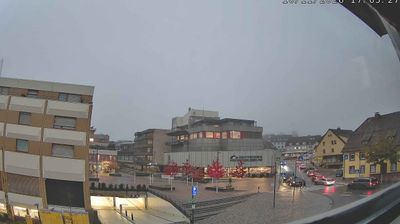
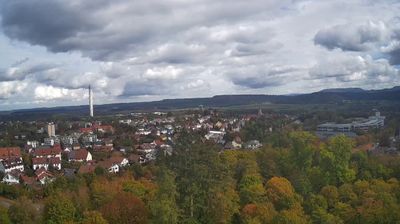
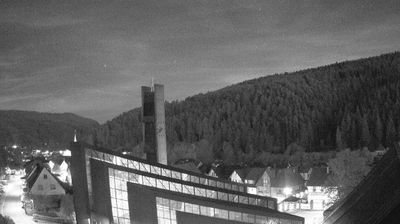

Villingen-Schwenningen has served as the seat of the Schwarzwald-Baar district in Baden-Württemberg since 1973. The city joins two formerly independent towns on the Baar plateau, between the Black Forest and the Swabian Alb. Villingen preserves sections of its medieval fortifications and gates, reflecting its long role as a walled town, while Schwenningen is known for the source of the Neckar and its watchmaking heritage. Villingen’s Fasnet, part of the Swabian-Alemannic carnival tradition, remains a major element of local identity. Find related webcams in the surrounding Black Forest and Baar region to build a fuller picture of Villingen-Schwenningen.
5 webcams
Baden-Württemberg is best known within Germany for the Black Forest, the wooded upland region that shapes much of the state’s southwest. Its terrain also reaches from the Upper Rhine plain and its wine-growing areas to the limestone ridges of the Swabian Jura, while Lake Constance marks part of the southern frontier. Stuttgart, the state capital, is closely tied to the automobile industry and hosts the Mercedes-Benz Museum and Porsche Museum. Heidelberg’s old town and castle add another important strand to the region’s identity, alongside renowned universities, spas and regional cooking. Find related webcams in the surrounding area to build a fuller picture of Baden-Württemberg.
548 webcams
Germany stretches from the North Sea and Baltic Sea coasts to the Alps on its southern border, encompassing northern plains, river valleys and forested uplands. The Rhine, Danube and Elbe have long connected its regions, while the Black Forest and Bavarian Alps give the south a more dramatic relief. Berlin’s Brandenburg Gate and Museum Island reflect the capital’s role in German history and culture. Cologne Cathedral, a UNESCO World Heritage Site, rises above the Rhine, and the Bauhaus movement, founded in Weimar in 1919, transformed modern design far beyond Germany. Regional cooking, Christmas markets and brewing traditions bring further character to daily life. Browse additional webcams from the surrounding area to extend your view of Germany.
2.8K webcams