 Puttgarden: Grüner Brink
The Baltic Sea defines the setting of Grüner Brink near Puttgarden — shallow coastal water, a broad beach and low dunes give this northern edge of Fehmarn its open character. Grüner Brink is a protected coastal area whose habitats provide resting and feeding ground for migratory birds. Footpaths run along the shore, linking the quieter nature reserve with a recreation beach. Nearby Puttgarden has the ferry port for the crossing to Rødby in Denmark across the Fehmarn Belt, placing this shore beside one of the established sea links between Germany and Scandinavia.
Generated by AI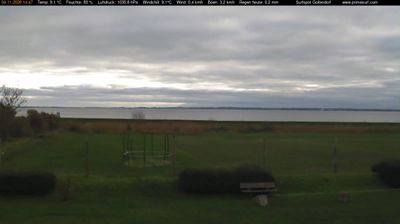



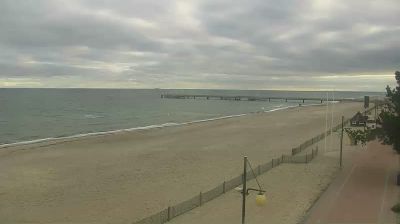



Puttgarden has served as a ferry port in Schleswig-Holstein since 1963. On Fehmarn’s northern coast, it faces the Fehmarn Belt, the Baltic Sea strait separating Germany from Denmark. Ferries have long connected Puttgarden with Rødby on Lolland, making the settlement a familiar transit point on the route between Hamburg and Copenhagen. The harbour was developed for the Vogelfluglinie, the rail-and-road link named after the migratory bird route across the Baltic. Beyond terminals and tracks, Fehmarn is a low, windswept island of fields and beaches, with coastal paths and birdlife shaping its maritime character. Place Puttgarden in the context of Fehmarn and the western Baltic by browsing webcams nearby.
1 webcam
Schleswig-Holstein blends maritime openness with rural calm in a way that reflects its position between the North Sea and the Baltic Sea. Germany’s northernmost state borders Denmark and stretches across low farmland, marshes, sandy shores and islands. The Kiel Canal crosses the region, linking the North Sea at Brunsbüttel with the Baltic near Kiel. On the west coast, the tidal flats of the Wadden Sea form part of a UNESCO World Heritage site. Lübeck’s historic centre, shaped by the Hanseatic League and Brick Gothic architecture, adds an important urban counterpoint. Browse additional webcams from the surrounding area to extend your view of Schleswig-Holstein.
114 webcams
Germany stretches from the North Sea and Baltic Sea coasts to the Alps on its southern border, encompassing northern plains, river valleys and forested uplands. The Rhine, Danube and Elbe have long connected its regions, while the Black Forest and Bavarian Alps give the south a more dramatic relief. Berlin’s Brandenburg Gate and Museum Island reflect the capital’s role in German history and culture. Cologne Cathedral, a UNESCO World Heritage Site, rises above the Rhine, and the Bauhaus movement, founded in Weimar in 1919, transformed modern design far beyond Germany. Regional cooking, Christmas markets and brewing traditions bring further character to daily life. Browse additional webcams from the surrounding area to extend your view of Germany.
2.1K webcams