 l'Hospitalet de Llobregat: Plaça Cerdà
Built around a medieval travellers’ hospital, l’Hospitalet de Llobregat grew into Catalonia’s second-largest municipality. It lies on the Llobregat delta, immediately southwest of Barcelona, where former agricultural land gave way to dense neighbourhoods, industry and major transport routes. The Gran Via corridor and Plaça d’Europa concentrate offices, hotels and the Fira Barcelona Gran Via exhibition venue, a major event site for the metropolitan area. Older quarters retain the Church of Santa Eulàlia de Provençana, while the former Tecla Sala textile factory now serves as a cultural centre. Together, these layers make l’Hospitalet a distinctly urban counterpart to Barcelona, shaped by expansion and industrial heritage.
Generated by AI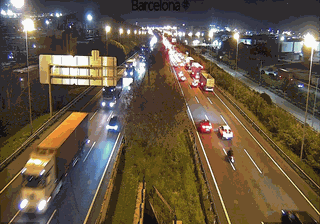
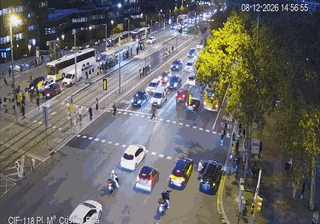
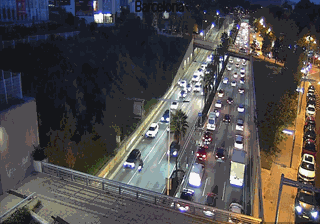

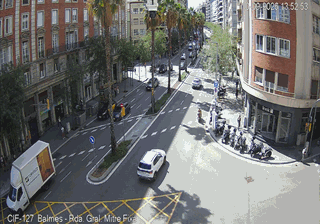
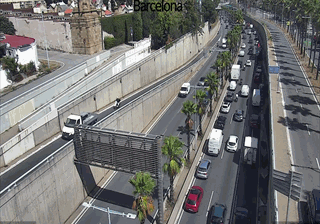

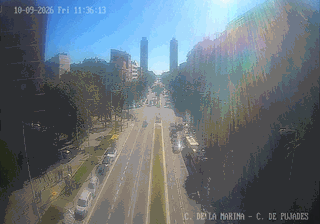

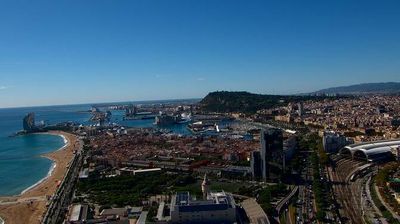

Few cities in Catalonia have a past as deeply connected to the conversion of the Llobregat plain from farmland to industry as l’Hospitalet de Llobregat. Immediately southwest of Barcelona, this independent municipality forms part of the continuous metropolitan fabric stretching toward the Llobregat River and the Mediterranean. Rapid 20th-century growth brought workers and new neighbourhoods to land once marked by fields and factories. The former Tecla Sala textile complex now serves as a cultural centre, preserving a tangible link with that industrial chapter. Markets, civic squares and Rambla Just Oliveras maintain a distinct local rhythm within the vast Barcelona urban area. Browse other webcams across Catalonia to place this setting in a wider geographic context.
2 webcams
Catalonia combines Mediterranean ease with rugged inland terrain in a way that reflects its position between the Pyrenees and Spain’s eastern coast. In northeastern Spain, the region extends from the coves of the Costa Brava to high mountain valleys and the Ebro Delta. Barcelona is its largest city and cultural reference point, known for Antoni Gaudí’s still-unfinished Sagrada Família. Inland, the serrated massif of Montserrat rises near Catalonia’s geographic centre and is home to the Benedictine monastery of Santa Maria de Montserrat. Catalan is co-official with Spanish, and the region’s language, cuisine and traditions give everyday life a distinct identity. Discover how Catalonia connects with the Pyrenees, coast and neighbouring regions by browsing webcams nearby.
272 webcams
Spain extends from the Cantabrian coast to the Canary Islands, encompassing Atlantic shores, Mediterranean beaches and the broad interior Meseta. The Pyrenees form its northeastern frontier, while the Guadalquivir crosses Andalusia on its way to the Atlantic. Madrid anchors the country’s political and cultural life, but distinct regional identities are central to Spain’s character: Catalonia, the Basque Country, Galicia and Andalusia each have their own languages or strong local traditions. Granada’s Alhambra is a major monument of the medieval Nasrid dynasty, and Santiago de Compostela remains the destination of the Camino de Santiago. Browse related webcams around the Iberian Peninsula to build a fuller picture of Spain.
1.4K webcams