 Rottenburg am Neckar: Eugen-Bolz-Platz - Rottenburg Cathedral
Rottenburg am Neckar lies along the Neckar River, its compact centre set within the gently rising, cultivated landscape of the upper Neckar valley. Eugen-Bolz-Platz is a central urban space named for Eugen Bolz, the Württemberg politician and anti-Nazi resistance figure executed in 1945. Nearby, St Martin’s Cathedral is the seat of the Roman Catholic Diocese of Rottenburg-Stuttgart; the church became a cathedral when the diocese was created in 1821. Rottenburg grew from the Roman settlement of Sumelocenna, and that past remains integral to the town’s identity. Historic façades, public buildings and streets converge here, placing everyday town life beside the cathedral that anchors the old centre.
Generated by AI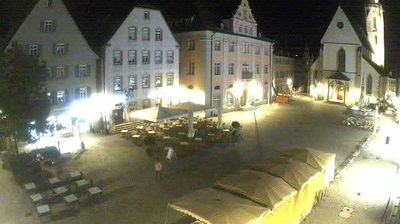

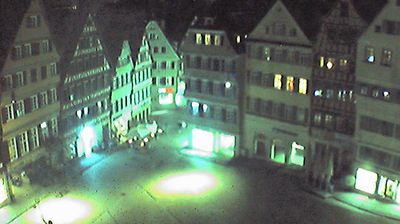
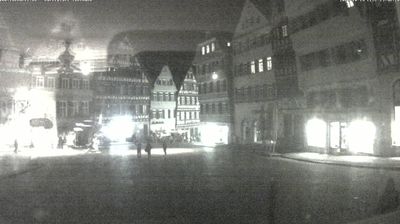
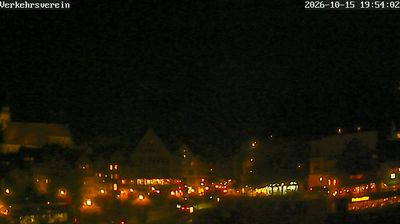

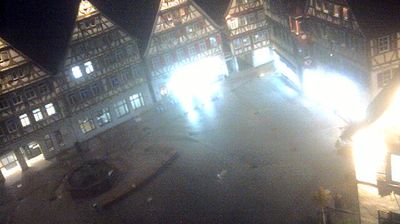


Rottenburg am Neckar has functioned as an administrative centre in the Neckar valley since the Roman era. Beneath and around the modern town lie traces of Sumelocenna, a Roman settlement in the province of Germania Superior; archaeological finds are presented at the Roman Museum. The compact old centre follows the river and retains timber-framed houses, while St Martin’s Cathedral reflects Rottenburg’s role as the seat of a Catholic diocese established in 1821. Vineyards and wooded slopes link the town to the wider landscape between the Swabian Jura and the Black Forest. Find related webcams in the Neckar valley and across Baden-Württemberg to build a fuller picture of Rottenburg am Neckar.
2 webcams
Baden-Württemberg is best known within Germany for the Black Forest, the wooded upland region that shapes much of the state’s southwest. Its terrain also reaches from the Upper Rhine plain and its wine-growing areas to the limestone ridges of the Swabian Jura, while Lake Constance marks part of the southern frontier. Stuttgart, the state capital, is closely tied to the automobile industry and hosts the Mercedes-Benz Museum and Porsche Museum. Heidelberg’s old town and castle add another important strand to the region’s identity, alongside renowned universities, spas and regional cooking. Find related webcams in the surrounding area to build a fuller picture of Baden-Württemberg.
542 webcams
Germany stretches from the North Sea and Baltic Sea coasts to the Alps on its southern border, encompassing northern plains, river valleys and forested uplands. The Rhine, Danube and Elbe have long connected its regions, while the Black Forest and Bavarian Alps give the south a more dramatic relief. Berlin’s Brandenburg Gate and Museum Island reflect the capital’s role in German history and culture. Cologne Cathedral, a UNESCO World Heritage Site, rises above the Rhine, and the Bauhaus movement, founded in Weimar in 1919, transformed modern design far beyond Germany. Regional cooking, Christmas markets and brewing traditions bring further character to daily life. Browse additional webcams from the surrounding area to extend your view of Germany.
2.8K webcams