 Wustrow: Seebrücke Wustrow
Tucked along the Baltic Sea coast of the Fischland peninsula, Wustrow is a place whose character is shaped by the narrow strip of land between the open sea and the Bodden lagoons. Seebrücke Wustrow extends from the resort’s sandy shore into the Baltic, expressing the town’s longstanding relationship with the water. Wustrow was once an important seafaring community; its maritime past survives in the former navigation school and in the local tradition of Zeesboats, broad-sailed wooden fishing boats used on the Bodden. Dunes and beach meet a settled village landscape on this stretch of Mecklenburg-Vorpommern’s coast, part of the wider Fischland-Darß-Zingst peninsula.
Generated by AI

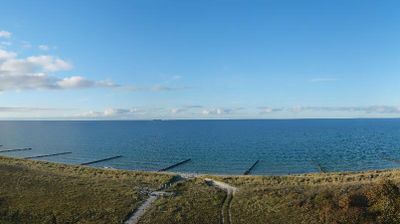


Wustrow lies along the Baltic Sea on the narrow Fischland peninsula, with the open coast on one side and the sheltered waters of the Saaler Bodden on the other. The settlement forms part of the Fischland-Darß-Zingst peninsula, a long strip of dunes, beaches and lagoon shorelines in Mecklenburg-Vorpommern. Wustrow developed as a fishing and seafaring community, and its maritime past remains visible in the village character and around the Bodden harbour. The tower of Wustrow Church is a prominent local landmark, while traditional Zeesboote sailing boats recall the working waters of the lagoon. Explore nearby webcam locations that provide complementary perspectives on Wustrow and the Fischland-Darß-Zingst peninsula.
4 webcams
Mecklenburg-Vorpommern is best known within Germany for its Baltic Sea coastline, including the islands of Rügen and Usedom. Its northern edge meets the Baltic, while the interior is marked by lakes, lowland forests and farmland; Lake Müritz is Germany’s largest lake lying entirely within the country. The white chalk cliffs of Jasmund National Park on Rügen are among the state’s defining coastal formations. Stralsund and Wismar retain historic Hanseatic town centres, both inscribed on UNESCO’s World Heritage List. Ports, seaside resorts and lake districts give the region a distinctly northern character. Continue with other webcams from the area to see how this part of northeastern Germany connects regionally.
107 webcams
Germany stretches from the North Sea and Baltic Sea coasts to the Alps on its southern border, encompassing northern plains, river valleys and forested uplands. The Rhine, Danube and Elbe have long connected its regions, while the Black Forest and Bavarian Alps give the south a more dramatic relief. Berlin’s Brandenburg Gate and Museum Island reflect the capital’s role in German history and culture. Cologne Cathedral, a UNESCO World Heritage Site, rises above the Rhine, and the Bauhaus movement, founded in Weimar in 1919, transformed modern design far beyond Germany. Regional cooking, Christmas markets and brewing traditions bring further character to daily life. Browse additional webcams from the surrounding area to extend your view of Germany.
2.8K webcams