 Altino: Col di Alfri - Lüch da Castalta
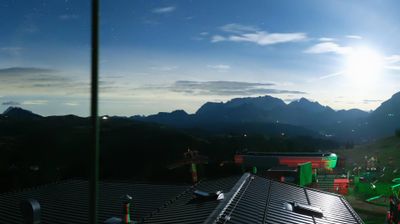
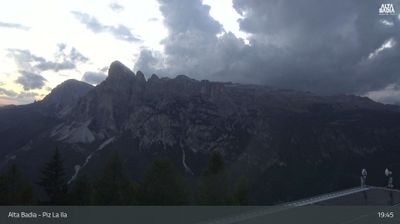
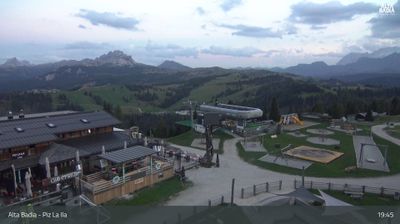
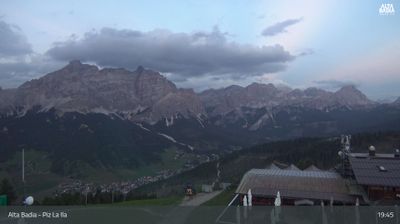
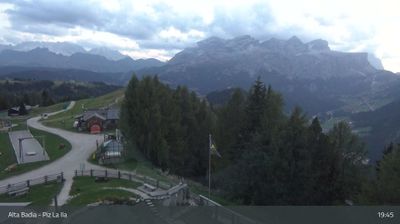
Few places in the Dolomites have a history as closely tied to Ladin-speaking alpine life as La Villa. Known in Ladin as La Ila, La Villa stands in the upper Val Badia of South Tyrol, amid a settled landscape of meadows, farm buildings and forest. Col di Alfri and Lüch da Castalta place it on the rural side of the valley, below the limestone massifs for which the Dolomites are known. Ladin, a Rhaeto-Romance language, remains central to local identity alongside Italian and German. Part of the municipality of Badia, La Villa reflects the enduring link between alpine settlement, grazing land and small-scale farming. The Dolomites became a UNESCO World Heritage Site in 2009, recognised for their distinctive geology and landforms.
Generated by AI


Altino is best known in Abruzzo for its sweet red pepper, a local variety celebrated each summer at the Festa del Peperone Dolce di Altino. This small hill town in the province of Chieti stands above the Aventino valley, with the Majella massif defining the wider setting. Strings of peppers are an enduring emblem of the festival, and the dried variety is valued in local cooking for its mild, fruity flavour rather than heat. Altino’s compact historic centre and agricultural surroundings reflect a part of Abruzzo where seasonal produce remains closely tied to community life. Discover other points of interest through webcams located across Altino and Abruzzo.
1 webcam
Abruzzo occupies a mountainous stretch between the central Apennines and the Adriatic Sea in Italy. Much of its identity comes from protected uplands: the Gran Sasso massif includes Corno Grande, at 2,912 metres the highest summit of the Apennines, while the Majella rises farther south. Forest, high pastures and valleys descend towards a long Adriatic coast. L’Aquila, the regional capital, retains its medieval core, and Abruzzo’s food culture is noted for saffron from the Navelli plateau and Montepulciano d’Abruzzo wine. See how Abruzzo fits into the wider central Italian landscape by browsing webcams nearby.
120 webcams
Among the countries of southern Europe, Italy stands out for its Mediterranean coastline and cities marked by the legacy of ancient Rome. The Alps form its northern frontier, while the Apennines run down the peninsula and the Po crosses the broad plain of the north. Rome’s Colosseum and Roman Forum recall the ancient empire; Florence is closely associated with the Renaissance, and Venice is built across a lagoon on the Adriatic. Food changes markedly between regions, from olive-oil cooking in the south to rice dishes in the Po Valley. Sicily and Sardinia add distinct island identities to a country whose regions retain strong local character. Explore nearby webcam locations that provide complementary perspectives on Italy’s coasts, cities and mountains.
3.1K webcams