 Sagres: Praia do Martinhal - Farol da Baleeira - Praia da Baleeira (Sagres)
Few places in the Algarve have a history as closely tied to Portugal’s maritime expansion as Sagres. On Portugal’s far southwestern coast, the town faces the Atlantic Ocean amid exposed headlands, coves and broad beaches. Farol da Baleeira marks the Baleeira side of Sagres, while Praia da Baleeira and the long sweep of Praia do Martinhal give this coast a sheltered, bay-shaped form distinct from the cliffs around Cabo de São Vicente. Sagres is closely associated with Prince Henry the Navigator and the 15th-century seafaring ventures that made the Algarve a point of departure for Portuguese voyages. The nearby Fortaleza de Sagres preserves that connection on a promontory above the Atlantic.
Generated by AI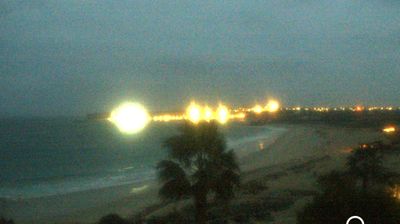
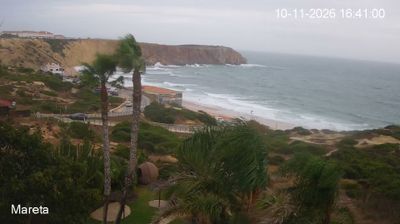
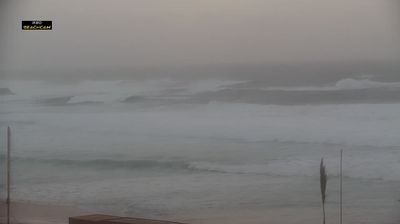
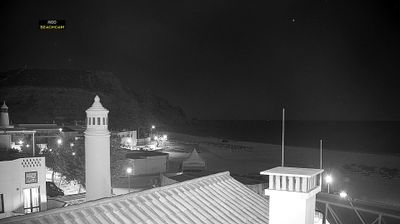
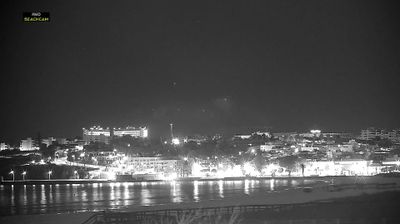
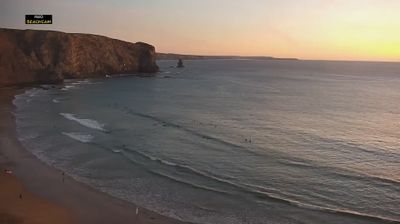


Among the towns of Portugal’s Faro district, Sagres stands out for its exposed setting on the Atlantic headland of Ponta de Sagres. The sea shapes daily life here: wind, swell and open water have made this far southwestern corner of the Algarve a recognised centre for surfing. Above the cliffs, Fortaleza de Sagres occupies the historic promontory. The fortress is closely associated with Prince Henry the Navigator and Portugal’s 15th-century era of maritime expansion, although its buildings have changed repeatedly over time. Nearby Cabo de São Vicente forms another prominent point on the Atlantic coast. Browse other webcams across the Algarve’s southwest coast to place Sagres in a wider geographic context.
4 webcams
Faro combines the quieter, cork-oak country of the interior with the maritime character of the Algarve coast in a way that reflects its position within southern Portugal. Around the inland settlements, low hills lead toward the Serra do Caldeirão, a transition zone between the Algarve and Alentejo. Southward, the Ria Formosa forms a long system of lagoons, salt marshes and barrier islands along the Atlantic shore. Faro, the Algarve’s administrative capital, preserves a walled old town, where Faro Cathedral stands on the site of a former mosque. This is an Algarve of small-town markets, cork landscapes and coastal wetlands rather than a single resort strip. View additional webcams nearby to better understand how Faro relates to the Algarve’s interior and Atlantic coast.
30 webcams
Portugal has served as an Atlantic maritime link between Europe, Africa and the Americas since the 15th century. The Atlantic shapes its western and southern shores, while the Douro crosses northern wine country on its way to Porto and the Tagus meets the sea in Lisbon. Belém Tower and the Jerónimos Monastery recall the seaborne expansion of the Portuguese crown, and their Manueline stonework remains a defining feature of the capital. Beyond the cities, the Algarve is known for beaches and limestone cliffs, while Serra da Estrela introduces a highland counterpoint inland. Azulejo tiles, fado and Port wine are enduring elements of Portuguese culture. Find related webcams in the surrounding area to build a fuller picture of Portugal’s Atlantic coast and interior.
176 webcams